The 7 Best Optoma 1080p 3d Projector For 2026
 By, Michael Brown
Updated
Summary
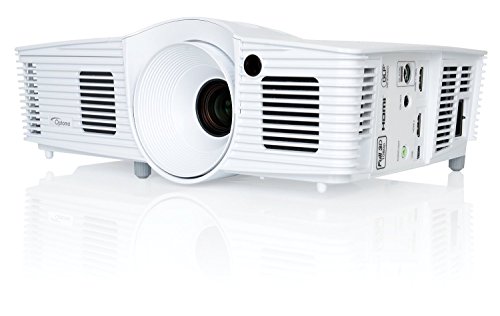
Optoma HD26 1080p 3D Projector

Optoma HD28HDR 1080p 3D Projector

Optoma HD30LV 1080p 3D Projector
For many home theater enthusiasts, Full HD is still the sweet spot for 3D projection. While 4K projectors continue to dominate the spotlight, a well-made 1080p projector often delivers smoother 3D playback, lower input lag, and a more affordable way to enjoy immersive movies and games. If your goal is to experience depth and realism rather than simply chase higher resolution, a quality 1080p model remains a smart choice.
Optoma has long been one of the most recognizable names in this category. The brand has built a strong reputation for producing projectors with bright images, responsive performance, and dependable 3D support, making its models a popular choice for dedicated home theaters as well as casual entertainment setups.
Among them, the Optoma HD26 1080p 3D Projector continues to stand out as one of the brand's most successful Full HD models. It combines sharp 1080p visuals, vibrant color reproduction, and reliable 3D performance in a package that has remained popular with movie lovers and gamers alike.
If you're searching for an Optoma projector that delivers an enjoyable 3D experience without stepping into the premium 4K price range, the options below are a great place to start. We've selected models that continue to offer excellent image quality, dependable performance, and strong overall value for home entertainment.
Our Top Picks


Full 3D compatibility 3200-lumen brightness Dynamic Black technology MHL connectivity
Lamp-based light source requires periodic replacement
The opening scene of a 3D movie quickly tells you whether a projector is up to the task. The HD26 was built with exactly that experience in mind, offering full 3D compatibility with Blu-ray 3D players along with gaming consoles like the Xbox, PS3, and PS4. If you still have a collection of 3D discs, this projector gives them plenty of reasons to come back out.
Brightness is another area where the HD26 remains surprisingly versatile. Its 3,200-lumen output allows it to handle rooms with more ambient light, while adjustable brightness modes let you dial things back for darker home theater setups and extend lamp life at the same time. The 25,000:1 contrast ratio and Dynamic Black technology help darker scenes retain better depth without sacrificing highlight detail.
Optoma rounds things out with thoughtful extras like HDMI and MHL connectivity, a backlit remote, a whisper-quiet fan, and a 12V trigger for motorized screens. Those details make the projector easier to integrate into a dedicated entertainment setup instead of feeling like a basic entry-level model.
Eventually, the lamp will need replacing as part of normal ownership. It's a routine maintenance task that newer laser projectors avoid, but one that's fairly typical for traditional lamp-based designs.

HDR10 compatibility 3600-lumen brightness 16ms gaming response Dynamic Black technology
Fan noise can be noticeable in quieter environments
Fast-paced games rarely leave much room for sluggish hardware. The HD28HDR answers with Enhanced Gaming Mode, delivering a 16ms response time at a 120Hz refresh rate while Game Display Mode brightens darker areas, making obstacles and opponents easier to spot during competitive play.
Movie fans aren't left behind either. HDR10 compatibility adds brighter whites and deeper black levels, while the six-segment color wheel produces accurate color with sRGB and Rec.709 profiles. Together with the 50,000:1 contrast ratio, the projector creates images that look richer and more dimensional than standard Full HD projection.
The generous 3,600-lumen brightness gives it another advantage during daytime viewing. Sports, TV shows, and movies remain easy to watch without turning every light off. Connecting an Apple TV, Amazon Fire TV, Google Chromecast, or modern gaming console is equally straightforward through the HDMI input, making it easy to jump between entertainment sources.
Quiet scenes can make the cooling fan easier to notice than during action movies or games. Once the soundtrack picks up, it tends to fade into the background naturally.

4500-lumen brightness 4K HDR input compatibility Full 3D support Dual HDMI inputs
No built-in smart operating system or streaming apps
Pulling the curtains isn't always practical, especially during weekend football games or afternoon family movies. With an impressive 4,500-lumen output, the HD30LV keeps images looking punchy in both low- and high-ambient-light environments, giving it far more flexibility than many traditional home theater projectors.
The projector doesn't stop at brightness alone. It accepts both 4K and HDR input, delivers rich cinematic color, and uses Optoma's DLP technology to produce brighter whites, deeper blacks, and crisp-looking text. That combination works equally well for movies, gaming, TV viewing, or even business presentations when needed.
Setup stays refreshingly straightforward thanks to the dual HDMI inputs. Plugging in a Blu-ray player, laptop, gaming console, or an Apple TV takes only a moment, making it easy to switch between work and entertainment without constantly swapping cables. Full 3D compatibility adds another layer of versatility for anyone who still enjoys 3D Blu-ray content or compatible consoles.
Streaming has to come from an external device because there isn't a built-in smart operating system. Fortunately, connecting a streaming stick or Apple TV is exactly what the HDMI inputs were made for.

3600-lumen brightness Enhanced Gaming Mode 16ms response time HDMI-Link support
Lamp replacement adds long-term maintenance costs
Action games demand quick reactions, and the HD146X doesn't waste time getting in the way. Enhanced Gaming Mode reduces input response to just 16ms, while Game Display Mode brightens darker areas of the image so hidden obstacles and opponents become easier to spot during fast-paced gameplay.
Movie nights benefit just as much from its home theater focus. A 3,600-lumen light output, Full HD resolution, and a 25,000:1 contrast ratio combine to produce a large, detailed picture that remains engaging whether you're watching blockbuster films or replaying favorite Blu-ray titles. Images can scale all the way up to 301 inches, creating a genuinely cinematic atmosphere.
Convenience plays a role here as well. HDMI-Link lets a single remote control both the projector and compatible connected devices, helping reduce remote clutter around the living room. Pair it with an Apple TV or gaming console, and switching between streaming and gaming becomes pleasantly simple. Up to 15,000 hours of lamp life in Dynamic mode keeps maintenance fairly infrequent.
Lamp ownership comes with eventual replacement costs, something laser-based projectors no longer require. The long lamp lifespan helps delay that expense for quite a while.

DuraCore laser technology 30,000-hour lifespan Short-throw lens 4K HDR input compatibility
Short-throw design requires careful placement for the best image geometry
Small rooms often force compromises, but the GT2100HDR avoids many of them. Its short-throw lens projects a 120-inch image from just over four feet away, opening up installation possibilities in bedrooms, apartments, or compact media rooms where standard projectors simply won't fit.
The move to DuraCore laser technology brings more than convenience. With up to 30,000 hours of maintenance-free operation, strong dust resistance, and lower power consumption than typical lamp-based projectors, ownership becomes noticeably simpler over the long run.
Performance stays well-rounded thanks to native 1080p resolution, compatibility with 4K HDR input, Enhanced Game Mode, and a striking 300,000:1 contrast ratio. HDMI and USB connectivity make pairing an Apple TV, streaming stick, or gaming console quick and painless, allowing the projector to transition smoothly between movie nights and gaming sessions.
Short-throw models reward careful positioning, since even small placement changes can affect image geometry more noticeably than standard-throw projectors. Taking a little extra time during setup usually pays off with an excellent final picture.

8.4ms response time 4000-lumen brightness 4K HDR input support Dual HDMI with 3D
No Horizontal Keystone or Lens Shift
Competitive gaming is clearly one of this projector's biggest priorities. Enhanced Gaming Mode drops input lag to just 8.4ms at 120Hz, giving fast shooters, racing titles, and sports games a noticeably quicker response on the big screen. The experience feels immediate rather than sluggish, which is exactly what serious players are looking for.
Movies and TV shows benefit just as much from the visual upgrades. Native 1080p resolution, support for 4K HDR input, and a 50,000:1 contrast ratio create crisp images with stronger contrast, while the six-segment color wheel reproduces accurate colors using both the sRGB and Rec.709 color profiles. Add the 4,000-lumen brightness, and daytime viewing becomes far less of a challenge.
Installation stays flexible thanks to vertical keystone correction and a 1.3x zoom. Dual HDMI inputs with 1.4a 3D support make it easy to switch between gaming consoles, Blu-ray players, Google Chromecast, or an Apple TV without constantly reconnecting devices.
Rooms with off-center projector placement may require a little more planning because horizontal keystone correction and lens shift aren't available. As long as the projector is positioned thoughtfully, image quality remains the main attraction.
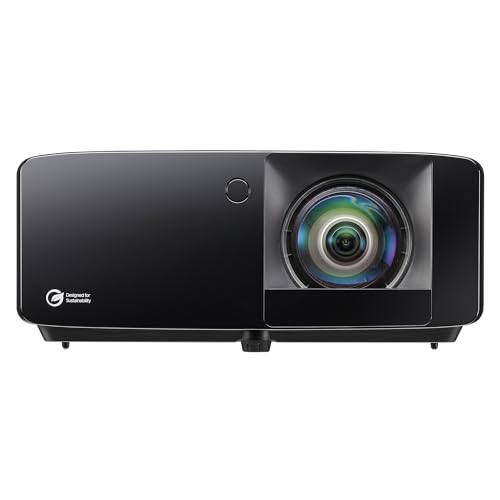
DuraCore laser technology 4200-lumen brightness Golf simulator ready 300-inch projection
Audio is basic
Golf simulation is more than just a marketing feature here. The GT2400HDR is specifically designed to create a large, detailed image in spaces where full-sized projector setups simply aren't realistic. Whether it's a dedicated golf bay or a multipurpose garage, the short-throw design makes the most of limited room while preserving sharp Full HD detail.
Movie nights receive the same attention. HDR10, HLG support, Dynamic Black technology, and a 300,000:1 contrast ratio work together to produce brighter highlights, darker blacks, and richer cinematic color. A projection size reaching up to 300 inches adds an unmistakable theater atmosphere that easily transforms an ordinary wall into the centerpiece of the room.
Long-term ownership becomes refreshingly simple thanks to the DuraCore laser light source. With up to 30,000 hours of virtually maintenance-free operation, instant on/off performance, and better energy efficiency than lamp-based projectors, there's very little ongoing upkeep to think about. Enhanced Gaming Mode with an 8.4ms response time rounds out the package for anyone planning to connect a console or an Apple TV alongside their golf simulator.
The built-in audio is enough to get started, although a dedicated sound system will create a far more immersive experience for movies, sports, and larger gatherings.
What to Look For in a best optoma 1080p 3d projector?
The internet is a platform in which you can get almost everything you want. Finding the best optoma 1080p 3d projector on whatever you need to know about how something works is an incredible guide for all of your needs.
Unfortunately, because of so many various websites out there which are either fraudulent or untrustworthy, finding what you're searching for on a single website might be difficult. Many consumers are hesitant to purchase the best optoma 1080p 3d projector because they are unclear if they are making the right selection.
The following post will explain four things to consider when purchasing a best optoma 1080p 3d projector for your needs.
Portability
Contrast Ratio
Contrast ratings can only be used to measure in dark rooms. They don't give any information about ambient lighting. Unusually dark blacks in the projector will result in lower contrast. A brighter projector will perform well in home theaters, but not in living rooms or offices.
Light Source
For longer periods of time, LEDs and lasers retain a greater percentage of their original brightness. While all light sources eventually lose their brightness, lamps lose the most in 500 hours. Then, they slowly decline over time. The brightness of LEDs and lasers will decrease more slowly over the course of their lifetimes.
Connection Methods
Component video, composite video and S-Video all make up the most common connections on large projectors. We're also seeing more projectors that offer direct USB connection to computers via a USB cable. A growing variety of projectors now have USB Type-C ports. The majority of USB-C ports can be used to transfer data or video using the DisplayPort protocol. Most USB-C ports support USB Power Delivery (USB PD), which means that a plugged in projector can supply 100 watts of power to charge a device or to charge it using a USB-C cable (assuming the device is capable of charging over USB-C).
Projection Tech
DLP projectors with single-chip DLP chips could be subject to the so-called "rainbow effect." Sometimes, tiny, bright flashes with rainbow-like colors may appear, especially in dark scenes. Some DLP projectors have a minimal effect, while others can produce a distracting result, especially when there are bright areas against shady backgrounds. The rainbow effect is not a problem with LCD projectors, which are safer if someone in your household has sensitive eyes. There are many DLP projectors that produce excellent images.
Brightness
The ambient lighting level, size and material of your projector screen will all affect the brightness. You should buy a professional seller if you are installing a projector in a permanent location, such as at your home, to ensure that you get the best image brightness and the correct screen material.
Resolution
The calculation for projectors that have 4K ultra high definition (3,840 x 2,160 pixels) is slightly different.
FAQs
Do Optoma 1080p projectors support 3D?
Many Optoma Full HD projectors support 3D playback, but compatibility varies by model. Always check the specifications before purchasing.
Is a 1080p Optoma projector good for home theater?
Yes. Full HD resolution provides sharp, detailed images, making it an excellent choice for movies, TV shows, and sports.
Are Optoma 1080p 3D projectors good for gaming?
Many models are designed with low input lag and high refresh rates, making them suitable for console and PC gaming.
Conclusion
The most appealing aspect of this post is that it contains the top models of best optoma 1080p 3d projector that clients require. It also sells reliable items and has a lot of positive feedback from customers.
Then, you may buy items from well-known companies with confidence through this page since you know they are the greatest on the market. You will also have the opportunity to look at a variety of alternatives for your favorite, particularly the Optoma GT2400HDR 1080p 3D Projector.
What is your favorite item? Please let us know! We're continuously on the lookout for new products and services to give our loyal consumers so that we may continue to provide them with high-quality goods at reasonable pricing.
About Michael Brown