The 7 Best Bright Projector For 2026, Tested And Researched
 By, Michael Brown
Updated
Summary

ELEPHAS 4K Projector
ONOAYO Projector

ViewSonic LS740HD Laser Projector
Projectors have quietly evolved from dark-room movie gadgets into everyday entertainment devices that can hold up even when the lights are on. Whether it’s a living room with large windows, a backyard movie night before sunset, or a sports setup where nobody wants to sit in complete darkness, brightness has become one of the biggest deciding factors when choosing a projector today.
A bright projector doesn’t just improve visibility, it makes the whole experience far more flexible. Daytime sports become watchable, casual streaming feels less restrictive, and movie nights no longer require turning every light off just to see what’s happening on screen. The challenge is that not every projector handles brightness the same way. Some push impressive lumen numbers on paper while struggling with color balance, contrast, or overall clarity once you actually start using them.
After researching a wide range of models across different price points, the ELEPHAS 4K Projector stood out as the best overall option for most people thanks to its strong brightness performance, sharp 4K visuals, and easy everyday usability. In this guide, we break down the best bright projectors for different viewing styles, room conditions, and budgets, including options for home theaters, gaming, outdoor movies, and daytime streaming.
Our Top Picks


3000 ANSI lumens Auto focus system Auto keystone correction Built-in Netflix support
Built-in smart platform can feel slower than dedicated streaming devices
A lot of affordable projectors start losing image strength the moment ambient light enters the room. The ELEPHAS 4K projector handles brighter environments much more confidently thanks to its 3000 ANSI lumen output and strong color intensity. Sports broadcasts, animated movies, and live events maintain solid vibrancy even without blackout curtains.
The optical setup deserves attention too. Edge softness is a common problem on larger projected images, but the precision glass lens system here keeps clarity more even across the screen. That becomes especially noticeable with subtitles, UI elements, or detailed 4K content where blurry corners can get distracting quickly.
Setup is refreshingly painless as well. Auto focus and auto keystone correction remove most of the annoying adjustment process that usually comes with portable projectors. Turning it on and getting a properly aligned image only takes a few moments, which makes spontaneous movie sessions much easier than older manual-heavy projectors.
The built-in smart platform can occasionally feel slower than dedicated streaming devices when navigating apps heavily. Once content actually starts playing though, the brightness and image clarity become the real focus of the experience.
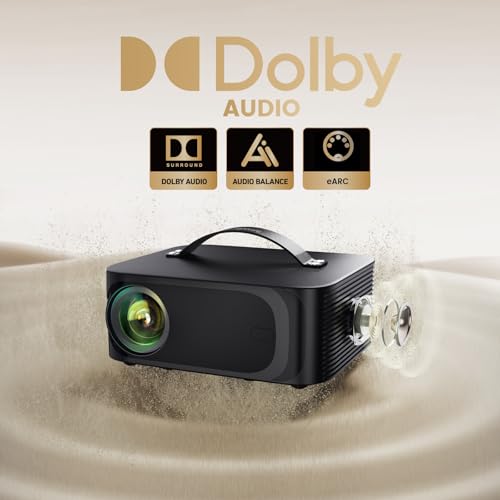
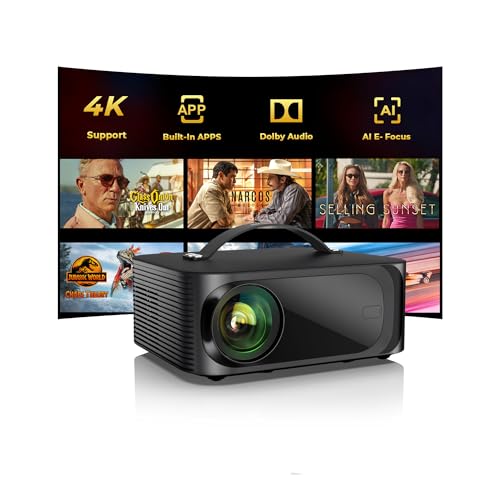
3000 brightness output Dolby Audio speakers AI image optimization Built-in Netflix support
Software support uncertainty
The first thing that stands out here is how aggressively the projector leans into full home theater immersion. The 3000-brightness output keeps the picture vivid in rooms with moderate ambient light, while the AI image optimization system helps colors look richer and more dynamic during movies and high-contrast scenes.
Large-screen content benefits a lot from the wide NTSC color coverage too. Bright highlights carry more intensity, darker scenes retain decent separation, and cinematic footage avoids the dull flatness that cheaper projectors often struggle with. Action scenes and animated films especially gain extra depth on larger wall projections.
Audio performance is where this model separates itself most clearly. The dual 50W Dolby Audio speaker system produces a much fuller soundstage than typical projector speakers, making dialogue clearer and explosions noticeably more spacious. For many people, it may genuinely remove the immediate need for external speakers.
Long-term software support is a bit harder to predict compared to more established projector ecosystems, especially with the custom Smart TV OS platform. Still, the combination of brightness, audio presence, and fast interface performance gives this projector a much more premium personality than expected.

5500 ANSI lumens 150-inch projection Instant power on 360-degree projection
Built-in speaker performance is basic for entertainment use
Sports simulators, golf setups, and oversized viewing areas demand a projector that can maintain image strength without depending on perfect darkness. The LS740HD pushes 5,500 ANSI lumens, giving it enough brightness to stay sharp and visible across larger projection sizes up to 150 inches.
Golf Mode also adds something genuinely useful instead of feeling like marketing filler. Virtual courses gain more realistic depth and visibility, helping terrain details and environmental textures stand out more naturally during simulation sessions. Fast-moving sports content also benefits from the brighter, cleaner image handling.
Setup flexibility is another strong point here. Optical zoom, keystone correction, portrait mode, and 360-degree projection support make installation easier across different room layouts. Instant power-on and shutdown also help the projector behave more like a ready-to-go display instead of older lamp-based systems that take time to warm up.
The integrated speaker is functional for quick presentations or casual use, although larger entertainment setups will sound noticeably better once paired with external audio equipment.
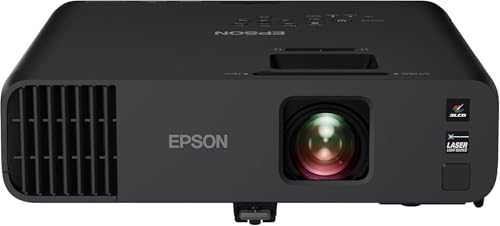
4600 lumens brightness 300-inch projection 3LCD color accuracy 20,000-hour laser source Miracast support
External streamer recommended
Brightness matters much more once projection sizes start getting truly large. The Pro EX11000 can scale all the way up to 300 inches while maintaining enough punch to stay usable in well-lit environments, which immediately separates it from many entertainment-focused home projectors.
Plus, Epson’s 3LCD system helps colors look more balanced and natural instead of overly cool or faded. Slides, spreadsheets, sports broadcasts, and video content all retain strong clarity without the rainbow artifacts some projection systems struggle with. That consistency becomes especially valuable during long viewing sessions or presentations where image fatigue can build up quickly.
The laser light source adds another practical advantage, too. With up to 20,000 hours of operation and no bulb replacements to worry about, the projector feels much more maintenance-friendly over time. Miracast support, dual HDMI ports, and USB power also make multi-device setups easier for mixed office and entertainment use.
One minor downside is that built-in smart streaming features are not included directly, so most users will probably pair it with a Fire TV Stick, Apple TV, or another external streaming device for full media functionality.

Short-throw projection HDR10 and HLG support Enhanced Gaming Mode Low input lag
Short-throw setup requires careful positioning
Projecting a huge image inside compact spaces normally requires compromises somewhere along the way. The GT2100HDR changes that immediately by throwing a 120-inch image from just over four feet away, making it much easier to create a large-screen setup in apartments, bedrooms, or gaming rooms.
Brightness remains strong enough to maintain a vivid image while HDR10 and HLG support add more contrast and highlight depth to movies and games. Whites appear brighter, darker scenes gain more separation, and the overall picture carries more cinematic intensity than standard 1080p projectors usually manage.
Gaming performance is another standout area here. Enhanced Gaming Mode lowers input lag significantly, while the fast response times help movement stay cleaner during competitive games and fast-paced action sequences. That extra responsiveness becomes obvious almost immediately during racing games or shooters projected at larger sizes.
Nevertheless, short-throw placement can take a bit more care during setup since small positioning changes affect image alignment more noticeably than standard projectors. Once dialed in though, the combination of brightness, responsiveness, and giant-screen immersion makes this projector incredibly fun to use

3200 ISO lumens Dolby Vision support Harman Kardon speakers 240Hz gaming support
Fan noise may be noticeable at higher brightness settings
Triple laser projection changes the personality of the image almost immediately. Colors look richer, highlights carry more intensity, and darker scenes gain a level of separation that standard LED projectors rarely maintain in brighter environments. The 3200 ISO lumens also help preserve image punch during daytime sports, movies, or YouTube viewing without forcing the room into complete darkness.
Movie playback benefits heavily from the IMAX Enhanced and Dolby Vision support as well. Cinematic scenes look more refined, contrast transitions appear smoother, and HDR content gains a stronger sense of realism on larger wall projections. Fast-moving scenes also stay impressively clean thanks to the 240Hz capability and gaming-focused features like VRR and ALLM.
The setup experience feels unusually polished too. Built-in Google TV, Harman Kardon speakers, optical zoom, and flexible lens shift all reduce the amount of extra equipment normally needed around a projector setup. It behaves much more like a premium entertainment hub than a simple display device. At maximum brightness, the cooling system becomes easier to notice in quieter rooms, especially during slower movie scenes late at night. But the image quality tends to pull attention away from it pretty quickly once the screen fills up.

3000 ANSI lumens 360° angle adjustment 1.67x optical zoom AI 4K upscaling
Premium price point
The flexibility here stands out immediately. Between the 360-degree horizontal rotation, generous tilt adjustment, and 1.67x optical zoom, the C2 Ultra adapts to awkward spaces much more naturally than most large-format projectors. Moving between bedroom walls, living room screens, or backyard movie setups feels surprisingly painless.
Brightness performance is strong too. With 3000 ANSI lumens and triple laser projection, daytime viewing remains vivid while darker scenes preserve respectable shadow detail and color richness. Whites appear cleaner, reds look fuller, and animated content especially gains a striking amount of visual energy on larger screens.
Moreover, Hisense handles image processing nicely with the AI 4K upscaler. Older movies, standard broadcast content, and lower-resolution videos gain noticeably sharper textures and cleaner detail without creating an artificial overprocessed look. Pricing lands noticeably higher than many mainstream bright projectors, particularly for buyers only wanting occasional movie nights. However, the feature set and projection flexibility make the premium positioning easier to understand once it’s actually in use.
What to Look For in the best bright projector
Perhaps as a customer, you may be looking for a best bright projector that may provide you with just what you want, such as being environmentally friendly, freely selected, and so on.
In this section, we will discuss with you the buying guides and main factors to consider when planning to buy the product from e-commerce websites, so that when the time comes to make your final selection, everything would be laid out in front of you.
Brightness
The ambient lighting level, size and material of your projector screen will all affect the brightness. You should buy a professional seller if you are installing a projector in a permanent location, such as at your home, to ensure that you get the best image brightness and the correct screen material.
Resolution
The calculation for projectors that have 4K ultra high definition (3,840 x 2,160 pixels) is slightly different.
Light Source
For longer periods of time, LEDs and lasers retain a greater percentage of their original brightness. While all light sources eventually lose their brightness, lamps lose the most in 500 hours. Then, they slowly decline over time. The brightness of LEDs and lasers will decrease more slowly over the course of their lifetimes.
Contrast Ratio
Contrast ratings can only be used to measure in dark rooms. They don't give any information about ambient lighting. Unusually dark blacks in the projector will result in lower contrast. A brighter projector will perform well in home theaters, but not in living rooms or offices.
Projection Tech
DLP projectors with single-chip DLP chips could be subject to the so-called "rainbow effect." Sometimes, tiny, bright flashes with rainbow-like colors may appear, especially in dark scenes. Some DLP projectors have a minimal effect, while others can produce a distracting result, especially when there are bright areas against shady backgrounds. The rainbow effect is not a problem with LCD projectors, which are safer if someone in your household has sensitive eyes. There are many DLP projectors that produce excellent images.
Connection Methods
Component video, composite video and S-Video all make up the most common connections on large projectors. We're also seeing more projectors that offer direct USB connection to computers via a USB cable. A growing variety of projectors now have USB Type-C ports. The majority of USB-C ports can be used to transfer data or video using the DisplayPort protocol. Most USB-C ports support USB Power Delivery (USB PD), which means that a plugged in projector can supply 100 watts of power to charge a device or to charge it using a USB-C cable (assuming the device is capable of charging over USB-C).
Portability
FAQs
What is considered a bright projector?
A projector with 3000 lumens or more is generally considered bright enough for rooms with ambient light.
Are bright projectors good for daytime use?
Yes, bright projectors perform much better in daylight or well-lit rooms compared to lower-lumen models.
Does a brighter projector mean better image quality?
Not always. Brightness helps visibility, but resolution, contrast ratio, and color accuracy also affect overall image quality.
Conclusion
In summary, the best bright projector is the one that will provide you with exactly what you want. Provided that you are not satisfied with the models listed above, we propose Hisense C2 Ultra Projector for you.
If you are unclear about how to select an item for yourself or someone else at any time in this post, please let us know! Our team of professionals is always pleased to help you find the best match.
About Michael Brown