The Best Oled Tv For Movies Of 2026
 By, Michael Brown
Updated
Summary

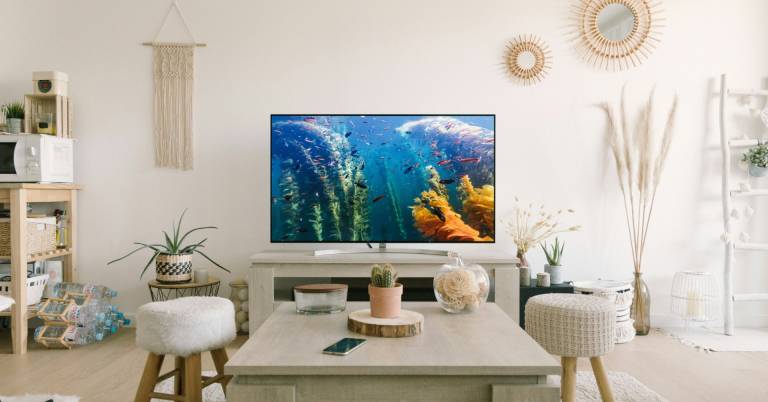
LG 55-Inch Class OLED evo AI 4K C5 TV

Sony 65 Inch BRAVIA 8 II OLED 4K TV

Samsung 65-Inch Class OLED S90F 4K TV
Movie nights expose a television’s weaknesses faster than almost anything else. Dark scenes can look gray, shadow details can disappear, and bright highlights may feel flat instead of dramatic. OLED technology addresses these problems at the pixel level, allowing individual pixels to switch off completely for deep blacks, strong contrast, and a more cinematic picture.
That advantage becomes especially noticeable in dim rooms. Space scenes gain real depth, nighttime sequences retain subtle detail, and letterbox bars blend naturally into the surrounding darkness. Fast pixel response also keeps action scenes and camera movement looking clean, while wide viewing angles help the picture stay consistent when several people are watching together.
At the center of this roundup is the LG 55-Inch Class OLED evo AI 4K C5 TV. Its large OLED panel, vibrant color performance, and powerful image processing make it an excellent fit for films that rely on dramatic lighting and visual detail.
A strong movie TV should pull attention toward the story, not make viewers think about blooming, washed-out blacks, or distracting motion. The selections ahead were chosen with that experience in mind, covering OLED options for different room sizes, budgets, and home cinema setups.
Our Top Picks


Brightness Booster Bright Room Ready Alpha 9 AI Processor Gen8 Perfect Black and Perfect Color
No HDR10+ support
Movie night rarely waits for the room to become perfect. With Brightness Booster and a Bright Room Ready design, the C5 keeps highlights lively when daylight or lamps are still competing with the screen. Once the room darkens, more than 8.3 million self-lit pixels take over, creating the Perfect Black and Perfect Color presentation that gives OLED its appeal.
The Alpha 9 AI Processor Gen8 adjusts the image according to what is playing. AI Super Upscaling improves lower-resolution movies and television, helping a varied streaming library feel more consistent without making every title look identical.
For a film-first setup, the format combination is particularly convenient. Dolby Vision brings richer contrast, color, and brightness to compatible movies. Dolby Atmos expands the soundtrack, while FILMMAKER MODE pulls back unnecessary processing so motion and framing remain closer to the director’s choices.
That makes the C5 easy to live with: brighter when the room needs it, precise when the lights go down, and flexible enough for old favorites as well as new releases. HDR10+ is not supported, but Dolby Vision provides the main dynamic-HDR route for movie viewers. The overall experience feels less like managing a display and more like simply choosing what to watch.
QD-OLED panel XR Triluminos Max XR Processor with AI Studio Calibrated modes
Only two HDMI 2.1 inputs
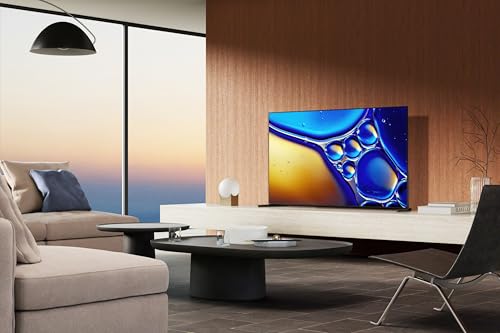
Some films earn a quiet room. The BRAVIA 8 II rewards that attention with more than eight million self-lit pixels, giving dark scenes a genuinely black foundation instead of a gray wash. Its high OLED brightness then lets candles, reflections, and small points of light emerge without flattening the surrounding shadows.
A Quantum Dot panel and XR Triluminos Max handle the color. The result is not simply a louder picture; subtle skin tones, costume colors, and production design have more room to look distinct. Sony’s XR Processor with AI adjusts color, contrast, and clarity in real time, while XR Clear Image restores detail in HD and digital sources.
Movie support is where the television feels especially well considered. Studio Calibrated modes are available for Netflix, Prime Video, and Sony Pictures Core. Dolby Vision and Atmos, IMAX Enhanced, and DTS:X cover a wide range of cinematic formats, and Sony Pictures Core also includes access to an IMAX Enhanced movie collection.
Google TV keeps streaming apps together, while AirPlay 2 and Google Cast make it easy to send something to the screen from another device. Only two inputs support HDMI 2.1, so a setup with several current-generation gaming devices may need some planning. For movie viewing, the careful color and format support remain the more memorable strengths.

NQ4 AI Gen3 Processor 128 neural networks AI 4K upscaling HDR-like SDR remastering Up to 4K 144Hz
No Dolby Vision support
There is always that one film you know by heart: the soft opening credits, the grain in the night scenes, even the moment when the picture normally starts to look a little rough. On the S90F, the NQ4 AI Gen3 Processor uses 128 neural networks to clean up those uneven sources and bring them closer to a sharp, smooth 4K presentation.
That processing also works with brightness and contrast at the pixel level. Instead of simply making the entire screen brighter, the television analyzes each scene and brings out smaller highlights and details. A streetlamp in a dark alley or sunlight catching the edge of a face can stand out while the surrounding scene keeps its depth.
SDR movies receive extra attention through HDR-like remastering, which adds brighter highlights, stronger color, and clearer detail. Fast movement is handled just as thoughtfully. Motion processing reduces blur and flicker around moving objects and text, while compatible gaming sources can run at up to 4K 144Hz.
The one format consideration is Dolby Vision, which the S90F does not support. For a mixed collection of older favorites and newer 4K content, though, its strongest quality is consistency: you can choose the movie first and worry less about the source quality.

Master OLED PRO Cinema Size HCX Pro AI Processor MKII Dolby Vision IQ and HDR10+ Adaptive 360 Soundscape Pro
Premium pricing
The first time a movie soundtrack seems to come from beyond the edges of the television, the room suddenly feels larger. Panasonic’s 360 Soundscape Pro uses front-array, upward-firing, and side-firing speakers, all tuned by Technics, to create that effect. Dolby Atmos adds height, helping dialogue, ambience, and action occupy more than the center of the screen.
The picture is equally ambitious. A large Master OLED PRO Cinema Size panel delivers enhanced brightness and dynamic contrast, while micro-lens-array technology and the HCX Pro AI Processor MKII strengthen color accuracy and clarity. Dark scenes retain their depth, but bright details still have enough energy to make a 77-inch image feel cinematic.
The Z8 also supports HDR10, HDR10+, Dolby Vision, and HLG. Intelligent sensing allows HDR10+ Adaptive and Dolby Vision IQ to respond to room brightness, so the presentation remains natural when movie night begins before sunset.
Fire TV brings live television, apps, voice control, and recommendations together. Game Mode Extreme adds HDMI 2.1, 144Hz, VRR, FreeSync Premium, and G-SYNC for gaming after the film ends. Premium pricing is the clear consideration, though part of that cost goes toward a panel and sound system designed to work as one complete experience.

20-neural-network processing AI 4K upscaling Dynamic brightness and contrast Pantone-validated color
NQ4 AI Gen2 is less advanced than Samsung's Gen3 processor
At 77 inches, a television becomes part of the furniture whether you plan for it or not. Samsung leans into that reality with smooth, wave-like lines that give the S85F a softer presence in the room. Once the lights go down, the same large screen gives wide landscapes and crowded action scenes room to breathe.
The NQ4 AI Gen2 Processor uses 20 neural networks to enhance picture quality and optimize sound. When the source is below 4K, the processor improves sharpness and smoothness so an older stream does not look needlessly stretched across the larger panel.
Movies with strong light-and-shadow contrast benefit from scene-by-scene brightness analysis. Bold highlights have more impact, while inky blacks help nighttime scenes hold their atmosphere. Pantone-validated color brings a more grounded quality to skin tones, so faces look natural even when the rest of the movie uses a vivid or stylized palette.
The NQ4 AI Gen2 is less advanced than Samsung’s Gen3 processor, which matters most to shoppers comparing it directly with the higher S90F. The S85F makes its case elsewhere: generous 77-inch scale, reliable 4K enhancement, realistic color, and a design that feels considered even after the credits stop rolling.

77-inch OLED screen XR Processor XR Clear Image Studio Calibrated modes Dolby Vision and Atmos
Large 77-inch footprint
The room feels different when a 77-inch film begins and the screen does not call attention to its own size. More than eight million self-lit OLED pixels give the XR8B pure black and high brightness, allowing the image to feel expansive without turning dark scenes hazy or bright objects harsh.
Sony’s XR Processor works quietly in the background, improving color, contrast, and clarity from scene to scene. XR Clear Image helps HD and digital movies hold together on the larger panel, where compression and softness would otherwise be easier to spot. During chase scenes or quick camera pans, XR OLED Motion keeps the action clearer and reduces distracting blur.
The movie format list is reassuringly complete: Dolby Vision and Atmos, IMAX Enhanced, and DTS:X are all supported. Netflix and Prime Video also receive Studio Calibrated picture modes, giving viewers a simple way to see compatible content closer to its intended look.
Google TV gathers major streaming apps on one screen, and both AirPlay 2 and Google Cast make casual sharing straightforward. PlayStation 5 owners also get Auto HDR Tone Mapping and Auto Genre Picture Mode. The practical tradeoff is the large 77-inch footprint, which needs the right wall or cabinet. Give it enough space, and it creates a convincingly cinematic centerpiece.

Master OLED Ultimate panel Dolby Vision IQ and HDR10+ Adaptive FILMMAKER and cinema picture modes Up to six Fire TV profiles
No Backlit Remote
Nobody wants to spend the first ten minutes of movie night scrolling through rows of things no one plans to watch. Fire TV puts favorite apps on the main screen, while as many as six profiles can keep separate watchlists and recommendations. Each person gets a more useful home page without rearranging everyone else’s queue.
Once a movie starts, the Master OLED Ultimate panel presents it at 4K resolution with OLED Ultimate Contrast. HDR10+ Adaptive, HDR10, HLG, and Dolby Vision IQ cover a wide range of HDR material. Viewers can choose Cinema, True Cinema, FILMMAKER, Professional, Dolby Vision, or Netflix Adaptive Calibrated modes depending on how closely they want to follow the original presentation.
The panel reaches up to 144Hz, bringing smooth motion for compatible gaming and other high-frame-rate sources. Hands-free Alexa can find a movie, play music, or control compatible smart-home devices from across the room. When the television is idle, Fire TV Ambient Experience can display artwork, personal photos, music, and Alexa widgets instead of leaving a blank screen.
The remote is not backlit, so finding the correct button in a dark room may take a moment. Voice control eases that inconvenience, and the mix of individual profiles, movie picture modes, and adaptive HDR makes the Z95 especially comfortable in a shared household.
What to Look For in a best oled tv for movies?
You may know that best oled tv for movies is a kind of product many customers are hesitant to pay for. It is not due to its quality but the fact that there are many factors you must consider. Nevertheless, all your worry is not a problem for us. Our knowledgeable staff will help you with the right decision.
Tech-evaluated and high-rated products are available in our list of eligible items. Here are some indispensable things you shouldn’t ignore:
Refresh Rate
HDMI And Connections
High Dynamic Range (HDR)
Display Types
Connectivity
Smart TVs
Screen Resolution
TV Screen Sizes
FAQs
Why is an OLED TV good for watching movies?
OLED TVs produce perfect blacks, excellent contrast, and accurate colors, creating a more cinematic and immersive viewing experience.
What size OLED TV is best for movies?
Popular sizes include 55, 65, and 77 inches. The best choice depends on your room size and viewing distance.
Is OLED better than LED for movies?
For most movie lovers, yes. OLED offers superior contrast and black levels, while LED TVs are typically brighter and often more affordable.
About Michael Brown