The Best 4k Monitor For Graphic Design Of 2026
 By, Michael Brown
Updated
Summary

SAMSUNG 32" UJ59 Monitor

Gawfolk 28 inch 4K Monitor

Dell 27 Plus 4K Monitor S2725QS
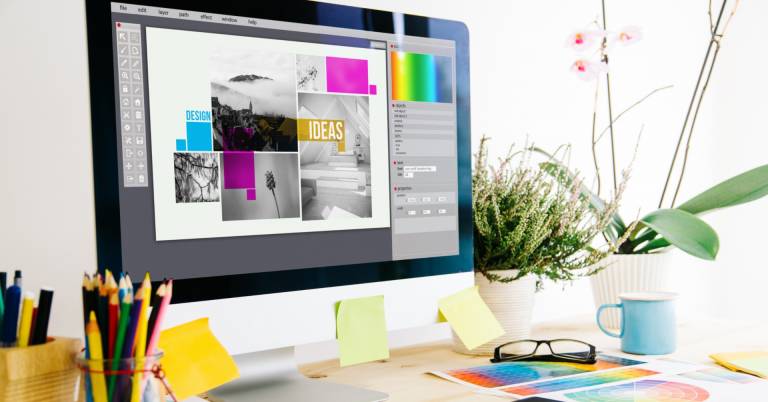
Graphic design is all about details. The right shade of blue. The subtle gradient that makes a logo pop. The sharpness of a thin line that separates good design from great design. And none of that works well on a blurry or low-resolution screen. For designers, a monitor is not just a display. It is the canvas, the tool, and the final judge all rolled into one.
A 4K monitor has become the standard for serious graphic design work. Four times the resolution of 1080p means you can see every pixel, every edge, every tiny imperfection that clients might miss but designers cannot afford to ignore. Colors need to be accurate. Details need to be crisp. And the screen needs to be large enough to work comfortably without squinting or constantly zooming in and out.
After combing through user reviews, tech comparisons, and feedback from creative professionals, one product consistently impressive is the SAMSUNG 32" UJ59 Monitor. With its 4K resolution and reliable color performance, it gives graphic designers the workspace and clarity needed for detailed creative work. Below, we explore the best 4K monitors for graphic design across different budgets and feature sets.
Our Top Picks

32-inch 4K panel Billion-color support Picture-by-Picture mode UHD upscaling technology
Basic tilt adjustment
Morning design work gets a lot easier when there’s enough screen space to stop constantly zooming in and out of timelines, artboards, and layered projects. The 32-inch panel on Samsung’s UJ59 changes the entire desktop experience immediately, especially for people juggling multiple windows all day.
Smaller 4K monitors can look incredibly sharp, but this one leans into workspace comfort instead. Adobe apps, reference images, browser tabs, and toolbars all sit naturally without feeling cramped. The billion-color support also helps gradients and subtle tones look smoother during photo or graphics work, which matters more than people realize once color correction begins.
There’s also something surprisingly useful about the Picture-by-Picture mode here. Designers using dual systems or switching between devices regularly can keep workflows moving without cluttering the desk with another monitor. However, the stand adjustment is fairly basic compared to more premium ergonomic setups, so some desks may benefit from a monitor arm. But the amount of usable screen space here makes creative workflows noticeably more comfortable.

3:2 aspect ratio 128% sRGB coverage 1.07 billion colors DC dimming technology Dual HDMI and DP
Basic built-in speakers
Vertical workspace is easy to underestimate until you stop scrolling every few seconds. Gawfolk’s unusual 3:2 display ratio changes the rhythm of graphic design work in a way traditional 16:9 monitors rarely do.
Editing long layouts, reviewing full-page designs, or managing large spreadsheets simply feels less interrupted here. The extra height gives Adobe tools and creative timelines more breathing room, while the 3840×2560 resolution keeps text and fine details extremely crisp. For designers spending hours inside Photoshop or Illustrator, that added canvas space becomes addictive surprisingly fast.
Color performance is another strong point. With 128% sRGB coverage and support for 1.07 billion colors, gradients appear smoother and saturation looks richer without becoming overly aggressive. The IPS panel also holds consistency nicely from different viewing angles, which helps during collaborative work or client reviews.
The built-in speakers are fairly basic, so most designers working with multimedia projects will probably end up using external speakers or headphones anyway. The screen itself is the real centerpiece here, especially for long-form creative work.

99% sRGB coverage ComfortView Plus Ultra-thin bezels AMD FreeSync Premium
No USB-C connectivity
A lot of 4K monitors focus entirely on resolution and forget that smoothness matters too. Scrolling through massive Photoshop canvases, dragging layers around, or previewing motion graphics simply looks cleaner on a 120Hz display, and that difference becomes hard to ignore once you get used to it.
Dell also balances color and comfort surprisingly well here. The IPS panel delivers strong color consistency with 99% sRGB coverage, while the improved ComfortView Plus mode helps reduce eye strain during long editing sessions without heavily washing out the image. That combination matters more on late-night projects when screen fatigue starts building up.
HDR support and the 1500:1 contrast ratio give darker visuals more depth as well. Black areas look richer, highlights carry more separation, and detailed textures remain visible without the image becoming overly aggressive. The ultra-thin bezels also help the setup look cleaner on modern desks, especially in dual-monitor workstations.
The missing USB-C connectivity may disappoint designers using newer MacBooks or minimalist cable setups, since adapters or docking stations become part of the workflow. Even so, the balance between smooth motion, color quality, and day-to-day comfort makes this display surprisingly easy to work on for hours at a time.

95% DCI-P3 coverage 125% sRGB gamut HDR400 support DisplayPort 1.4 connectivity
Thin plastic housing
The first thing that stands out here is the color intensity. With 95% DCI-P3 coverage and 125% sRGB support, artwork and photography carry noticeably more richness compared to standard office-oriented 4K monitors. Vibrant illustrations, cinematic edits, and layered digital artwork all gain extra depth without looking oversaturated.
HDR400 also plays a meaningful role in darker scenes and contrast-heavy work. Black areas retain more detail, subtle textures stay visible, and lighting transitions appear smoother during editing previews. Designers working on video content or high-contrast visual projects will probably appreciate that immediately.
Another nice detail is the wide viewing angle consistency from the IPS panel. Colors remain stable even when moving around the desk or reviewing work with someone sitting nearby. The connectivity setup is practical too, with HDMI 2.0 and DisplayPort 1.4 inputs making multi-device setups fairly painless.
The plastic housing does not look especially premium up close, particularly compared to more expensive creator-focused displays. But once the screen powers on, the image quality quickly becomes the center of attention anyway.

99% Adobe RGB 99% DCI-P3 coverage Factory pre-calibrated USB-C Power Delivery
Higher price point
Professional design work usually exposes weaker color calibration pretty quickly. Skin tones drift slightly off, gradients break apart, or shadow detail starts disappearing during export previews. ASUS clearly built the ProArt series to avoid those frustrations from the beginning.
The combination of 99% DCI-P3 coverage, 99% Adobe RGB support, and factory pre-calibration gives this monitor a noticeably more controlled image than typical consumer 4K displays. Color transitions appear smoother, contrast stays balanced, and edits translate more consistently across devices. Designers handling print work or client-sensitive branding projects will probably appreciate that stability immediately.
USB-C connectivity with 96W Power Delivery also simplifies modern desk setups more than expected. A single cable can handle display output, charging, and connectivity at once, which keeps creative workstations looking much cleaner. The wide viewing angles help too, particularly during collaborative reviews or presentation work. Price is really the only thing that pushes this monitor out of easy recommendation territory for some buyers. But once color accuracy becomes a priority instead of a luxury, the premium starts making a lot more sense.
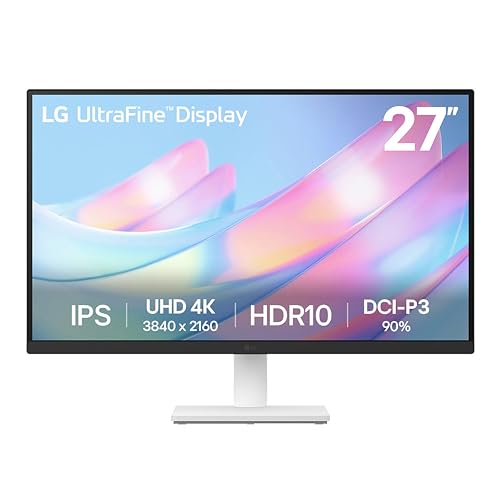
HDR10 support DCI-P3 color gamut OnScreen Control software Wide viewing angles Ergonomic stand
Only 60Hz
LG’s UltraFine series has always leaned toward simplicity, and the 27US500-W follows that same direction. The design stays understated, but the 4K panel does a lot of heavy lifting once detailed creatiBve work begins. Text remains crisp, small interface elements look sharp, and digital artwork gains noticeably more clarity compared to standard QHD displays.
The HDR10 support combined with DCI-P3 color coverage helps visual projects carry more vibrancy without becoming overly punchy. Photo edits, web graphics, and video previews all look balanced in a way that feels comfortable rather than exaggerated. Wide viewing angles also help maintain consistency when adjusting layouts or reviewing content from different positions around the desk.
One surprisingly practical feature is LG’s OnScreen Control software. Splitting windows, reorganizing workspaces, or adjusting monitor settings becomes much less annoying during busy editing sessions. The ergonomic stand also makes daily adjustments easier, particularly for people constantly shifting between work positions throughout the day.
The 60Hz refresh rate is perfectly fine for design-focused workloads, though motion does not look as fluid as newer high-refresh creator monitors. Even so, the screen quality itself remains calm, clean, and easy to trust for creative work.
32-inch screen size 4K UHD resolution Built-in speakers Up to 70Hz refresh
Slow startup time
There’s something satisfying about seeing full-size layouts, detailed illustrations, and multiple editing windows spread across a screen this large. The extra room changes how creative software behaves day to day. Timelines stretch out more naturally, reference material stays visible longer, and zooming in becomes less constant during editing work.
The 4K resolution helps preserve sharpness despite the larger panel size, so images retain strong detail without looking soft. Color contrast also comes across surprisingly well for the category, particularly during darker visual projects or cinematic editing work. Built-in speakers add a bit of convenience too, especially for simpler desk setups where external audio is not always necessary.
The slightly higher 70Hz refresh rate gives scrolling and cursor movement a touch more smoothness than standard 60Hz displays. It is not a dramatic jump, but it does help the desktop experience look a little cleaner during long work sessions.
Startup times can be a bit slower than expected, which becomes noticeable if the monitor is constantly powered on and off throughout the day. Once running though, the oversized workspace becomes the main reason people keep coming back to it.
What to Look for When Selecting best 4k monitor for graphic design?
There are numerous factors for customers to consider whenever they decide to buy a best 4k monitor for graphic design. Simultaneously, it comes with many product types and brands, which makes it difficult for you to choose yourself. Thus, we are here to give you support, guidance, and solutions to these problems. Our buying guide will highlight some most outstanding features related to the best 4k monitor for graphic design of 2026.
Nowadays, the number of technology sale networks, especially websites, sale forums, or even the online space for customers’ comments, has been dramatically increased. So, you can quickly obtain information on best 4k monitor for graphic design available on these sources.
Along with reading the update of best 4k monitor for graphic design on famous websites, you are also expected to go through some needed things below to make a great decision.
Response Time
Connections
Refresh Rate
Panel Type
Screen Size
Resolution
Aspect Ratio
Brightness
FAQs
Why is a 4K monitor important for graphic design?
A 4K monitor provides higher pixel density, allowing designers to see finer details and work more precisely on visuals and layouts.
What features should a graphic design monitor have?
Key features include high color accuracy (sRGB, AdobeRGB, or DCI-P3), IPS panel, 4K resolution, and good brightness consistency.
Is color accuracy more important than resolution?
Both are important, but color accuracy is often more critical for professional design work to ensure correct color representation.
About Michael Brown