The 7 Best Optoma Projector Models For 2026
 By, Michael Brown
Updated
Summary

Optoma HD146X Projector

Optoma HD28HDR Projector

Optoma HD39HDRx Projector
Finding the Best Optoma Projector Models means discovering that perfect blend of brilliant performance and smart value. For anyone creating a home theater, leveling up their gaming, or equipping a professional space, Optoma offers a trusted pathway to a stunning big-screen experience without the premium price tag. The real question is not about quality, but about fit, which of their many impressive models is designed for your specific needs?
The choice involves key considerations like native resolution for razor-sharp detail, peak brightness for your room's lighting, and specialized features for gaming or content creation. It's about matching the projector's strengths to your personal vision. Among the standout models, the Optoma HD146X Projector consistently earns praise as a versatile powerhouse. It delivers remarkable brightness for vibrant colors, and a super-responsive gaming mode, making it a favorite for those who want cinema-quality movies and immersive gameplay from one device.
To simplify your decision, we've gathered insights from home cinema experts, professional reviewers, and everyday users. This guide cuts through the specs to highlight the Optoma projectors that truly excel, helping you invest in a model that will transform your space and exceed your expectations for years to come.
Our Top Picks

Crisp native 1080p with high contrast Low-lag Enhanced Gaming Mode Flexible installation with zoom & keystone Long 15,000-hour lamp life
No 4K input signal support
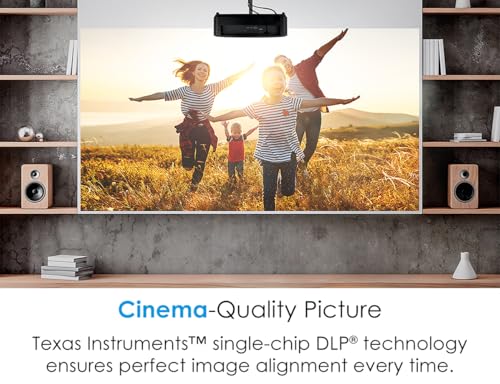
The HD146X is all about giving you a cinematic picture. Its native 1080p resolution is paired with a dedicated color wheel and Dynamic Black technology, which works to give bright scenes clarity and preserve detail in shadows. This focus on image depth is complemented by a DLP chip design that ensures perfect pixel alignment for a sharp picture. For gamers, the Enhanced Gaming Mode is a significant benefit, cutting down lag and boosting visibility in dark scenes for a more responsive experience.
We found the setup to be genuinely user-friendly thanks to features like the 40-degree keystone correction and 1.1x zoom, allowing for placement in a variety of rooms without a complex mounting process. HDMI-CEC support is a thoughtful touch, letting you control the projector and connected devices with one remote to reduce clutter. It's important to frame your expectations around its core resolution. The HD146X is engineered for high-performance 1080p and 3D content, which means it doesn't accept a native 4K input signal. This keeps it focused as an excellent value proposition for Full HD content, including from modern game consoles and streaming devices, but buyers seeking the absolute highest resolution source compatibility will need to look elsewhere. With a lamp life rated for up to 15,000 hours, it's built to be a long-term centerpiece for movie nights.

Very bright 3,600-lumen image Accepts 4K HDR input signal Ultra-fast 16ms gaming response Work seamlessly with 4K HDMI dongles
Fan noise can be noticeable during quiet scenes
The HD28HDR comes with 3,600-lumen brightness, which provides the flexibility for viewable images even with some lights on. This high output works in tandem with its HDR10 compatibility, which accepts a 4K HDR input to enhance the dynamic range within its crisp 1080p picture. The result aims for brighter highlights and deeper blacks, supported by a 50,000:1 contrast ratio. Gamers get dedicated attention here, too, with a remarkably fast 16ms response time in Enhanced Gaming Mode to keep action smooth and responsive. Connecting modern streaming devices is straightforward, as it's built to work seamlessly with 4K HDMI dongles like the Fire TV or Chromecast.
To achieve its high brightness and performance, the projector employs an active cooling system. During very quiet dialogue or silent moments in a film, the fan’s operation can become a part of the audio landscape. This is a common trade-off for projectors in this class, and the 26dB noise level is a reminder of the robust hardware working behind the screen to deliver that vibrant, colorful image.

4,000-lumen output Extremely fast 8.4ms gaming response Accepts 4K HDR input signal Built-in speaker for simple setup
Design and size are not especially compact for ceiling installations
The HD39HDRx makes its intent clear with a formidable 4,000 lumens of brightness, a specification that confidently allows for viewing with the lights on. This luminous power is directed through a precise color system to produce vivid, accurate images at a native 1080p resolution. Its performance is future-ready, accepting 4K HDR input to enhance contrast and color depth.
Where it truly aims to set itself apart is in gaming; a blistering 8.4ms response time is among the fastest available, designed to give players a critical edge in reaction-based titles. The inclusion of a built-in 10-watt speaker simplifies initial setup, and features like vertical keystone correction and a 1.3x zoom offer helpful flexibility for positioning on a table or shelf.
This projector's performance-oriented design gives it a more substantial footprint. For users planning a ceiling installation, its size is less discreet than some compact models, requiring a bit more forethought regarding placement and mounting hardware. On a practical shelf or stand, however, this is a minor note against its powerful, feature-rich performance.

Ultra-short throw from less than a foot Long-lasting 30,000-hour laser light source Very fast 8ms response time for gaming High-contrast image
Short-throw setup requires precise placement to avoid image distortion
Imagine projecting a massive 100-inch screen from just a foot away from your wall. The Optoma GT3500HDR makes this possible, redefining the ultra-short throw category for both gamers and movie fans. This compact unit pairs that flexible placement with the consistent performance of DuraCore Laser Technology, promising up to 30,000 hours of maintenance-free use. Its 3,800 lumens and high 500,000:1 contrast ratio aim to deliver a vibrant, detailed picture, further enhanced by its ability to accept a 4K HDR input signal.
For gamers, an 8ms response time at 120Hz is a serious asset, designed to keep gameplay feeling instantaneous. The inclusion of a capable 15W built-in speaker and a full suite of digital image adjustments rounds out a package built for convenience and longevity. Nevertheless, the nature of an ultra-short throw lens demands careful initial positioning. To achieve a perfectly rectangular and aligned image on your wall or screen, the projector requires precise placement during setup, as even small adjustments in its distance or angle can introduce noticeable distortion. Once dialed in with the helpful keystone and corner correction tools, however, it provides a uniquely tidy and space-efficient home theater solution that's built to last for years.

Very bright 4,000-lumen output Portable, compact form factor Long 15,000-hour lamp life Integrated 10-watt speaker
Keystone correction has no horizontal adjustment
We've all been in a room where the presenter fumbles with the lights, trying to find a compromise between visibility and a dull, washed-out screen. The W400LVe tackles this head-on with a confident 4,000 lumens of brightness, ensuring your slides remain vibrant and readable even with the blinds open. Its WXGA resolution and high contrast ratio keep text sharp and graphics clear, whether you're connected via a laptop HDMI port or a streaming dongle. The clever addition of a 10-watt speaker means you can watch a video without having to look for extra wires. Setup is forgiving, thanks to generous keystone correction and a zoom lens, so you can get the image squared away on the screen quickly from a tabletop or cart.
At less than seven pounds, its form factor is compact and it's undoubtedly portable. The keystone correction works vertically but does not offer horizontal adjustment. This means for a perfectly squared image, the projector itself needs to be centered left-to-right with your screen. A quick measurement with a tape measure during your initial placement solves this, aligning the lens directly with the screen's centerline. It’s a small, one-time consideration for a device that otherwise excels at turning any well-lit room into a clear, impactful presentation space at a moment's notice.

Short throw for small rooms Long-lasting laser light source Strong contrast and HDR support Energy-efficient compact design
Higher upfront price point
Spending time with the Optoma GT2100HDR, it’s clear this projector was made for real-world spaces. The short throw design immediately changes how you set things up, letting you project a large image from only 4 feet 4 inches away. That makes it easy to place on a table or media console, even in smaller rooms. The 1080p HD resolution keeps images clean and detailed, and there’s no need to worry about scaling or compression getting in the way.
What really impressed us was the DuraCore laser light system. With up to 30,000 hours of operation and IPX6 dust resistance, it’s built to keep running with very little attention. Colors look vibrant thanks to 4K HDR input support and a strong 300,000:1 contrast ratio, which adds depth to movies and games alike. Gamers will appreciate the enhanced game mode, where fast response times help keep gameplay smooth and responsive.
It’s also surprisingly efficient. The compact body takes up little space, and the power consumption is far lower than that of traditional lamp projectors. The price sits on the higher side, but that cost goes toward long-term durability, laser reliability, and a setup that works well in tight spaces without compromise.
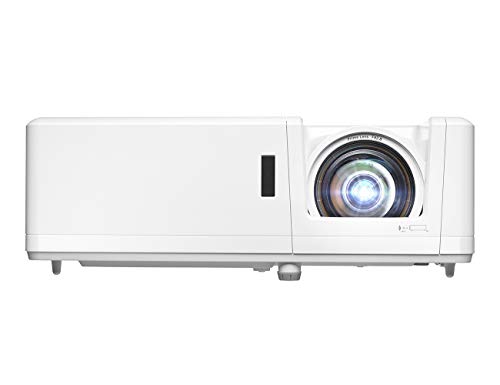
Very bright for any room Short throw easy placement Long-life laser light engine Simple image adjustment tools
Requires an external streaming device
Right away, the Optoma GT1090HDR shows its strength in versatility. The short throw lens makes it easy to create a 120-inch screen from just over four feet away, which is perfect for smaller rooms or quick setups. Add in 4,200 lumens of brightness, and you’re no longer limited to lights-off viewing. We found it works just as well in family rooms and brighter spaces, and even outdoor movie nights are clearly within reach.
This projector has a native 1080p resolution and can take in 4K HDR input, so the picture quality stays sharp. HDR10 and HLG make whites brighter and blacks darker, and the high contrast ratio makes films and games look more real. The DuraCore laser light source is another significant bonus. It lasts for up to 30,000 hours and is quite resistant to dust, so you don't have to do much maintenance.
Setup is refreshingly simple. Auto keystone and four-corner correction help fine-tune the image without much effort. There’s no built-in smart streaming system, but connecting a streaming stick or console through HDMI quickly fills that gap and keeps the experience flexible.
How to choose a good model of best optoma projector models
Choosing the best optoma projector models to buy might be difficult, but it is critical to locate a reputable brand that provides high-quality goods. This article will assist you in determining which is the greatest brand to purchase for high-quality items.
Before purchasing the best optoma projector models for your needs, there are several aspects to consider. The intended usage of the product is the most significant aspect. To avoid harming customers, the finest goods must be ensured on production materials. Here are some suggestions for purchasing the best optoma projector models.
Contrast Ratio
Contrast ratings can only be used to measure in dark rooms. They don't give any information about ambient lighting. Unusually dark blacks in the projector will result in lower contrast. A brighter projector will perform well in home theaters, but not in living rooms or offices.
Portability
Connection Methods
Component video, composite video and S-Video all make up the most common connections on large projectors. We're also seeing more projectors that offer direct USB connection to computers via a USB cable. A growing variety of projectors now have USB Type-C ports. The majority of USB-C ports can be used to transfer data or video using the DisplayPort protocol. Most USB-C ports support USB Power Delivery (USB PD), which means that a plugged in projector can supply 100 watts of power to charge a device or to charge it using a USB-C cable (assuming the device is capable of charging over USB-C).
Projection Tech
DLP projectors with single-chip DLP chips could be subject to the so-called "rainbow effect." Sometimes, tiny, bright flashes with rainbow-like colors may appear, especially in dark scenes. Some DLP projectors have a minimal effect, while others can produce a distracting result, especially when there are bright areas against shady backgrounds. The rainbow effect is not a problem with LCD projectors, which are safer if someone in your household has sensitive eyes. There are many DLP projectors that produce excellent images.
Brightness
The ambient lighting level, size and material of your projector screen will all affect the brightness. You should buy a professional seller if you are installing a projector in a permanent location, such as at your home, to ensure that you get the best image brightness and the correct screen material.
Resolution
The calculation for projectors that have 4K ultra high definition (3,840 x 2,160 pixels) is slightly different.
Light Source
For longer periods of time, LEDs and lasers retain a greater percentage of their original brightness. While all light sources eventually lose their brightness, lamps lose the most in 500 hours. Then, they slowly decline over time. The brightness of LEDs and lasers will decrease more slowly over the course of their lifetimes.
FAQs
What are Optoma projectors best known for?
Optoma projectors are known for strong brightness levels, sharp image quality, and reliable performance. They are commonly used for home theaters, gaming, and business presentations.
Which Optoma projector model is best for home theater use?
Optoma offers several home theater–focused models with high resolution and good contrast. The best choice depends on your room size, lighting conditions, and preferred resolution.
Are Optoma projectors good for gaming?
Yes, many Optoma projector models are designed with low input lag and fast response times, making them a solid option for console and PC gaming.
Conclusion
We hope that our helpful advice has assisted you in locating the best optoma projector models for your requirements. If you still can't locate one, contact the Optoma GT1090HDR Projector. If you encounter an issue, please contact us as soon as possible; we would be pleased to assist you with any questions or concerns. Now is an excellent moment to purchase!
About Michael Brown