The 7 Best Tv For Home Theater Of 2026
 By, Michael Brown
Updated
Summary

TCL 98-Inch Q65 QLED TV

Sony 75-Inch 4K BRAVIA 3 TV

Samsung 85-Inch QLED Q7F TV
Building a dedicated home theater is about recreating the magic of the movies, and it all begins with the screen. The television at the heart of this space must do more than simply display images; it must transport you, delivering the deep blacks of outer space, the subtle shadows of a film noir, and the explosive brightness of a summer blockbuster with absolute fidelity. Choosing the Best TV For Home Theater is a quest for cinematic truth, where every technical element works in harmony to honor the filmmaker's intent.
The journey starts with understanding the scale and technology capable of this level of performance. A truly immersive experience often demands a screen that fills your field of vision, pulling you directly into the action. For those seeking a commanding presence, the TCL 98-Inch Q65 QLED TV is a monumental choice. This model delivers expansive 4K clarity, vibrant Quantum Dot color, and advanced contrast through its high-performance panel, all at a scale that transforms any room into a legitimate cinema auditorium.
Our approach goes beyond specifications to evaluate how these televisions perform in a controlled environment. We analyze professional calibration data, HDR accuracy across different content, and real-world user feedback on long-term satisfaction. This guide is designed to help you select a television that doesn't just fill a wall, but truly transforms your space into a captivating, emotionally engaging home cinema.
Our Top Picks


Massive 98-inch immersive 4K display QLED PRO with rich, vibrant color 120Hz native refresh rate Built-in subwoofer for deeper bass
Higher power consumption due to screen size
Stepping up to a 98-inch screen changes how you experience content, and TCL has equipped this giant with the technology to make every inch count. The QLED PRO panel produces rich, vibrant colors across nearly the entire DCI-P3 color spectrum, ensuring that visuals remain detailed and lifelike even at this enormous size. The High Brightness+ LED backlight helps maintain image punch across the expansive display, while the combination of a 120Hz native panel and 480 Motion Rate keeps fast action silky smooth without distracting blur. For movie enthusiasts, the HDR PRO+ support covers every major format including Dolby Vision, so content is presented exactly as intended.
Gamers will appreciate the thoughtful additions under the hood. The Game Accelerator 240 delivers up to 240 VRR for responsive, tear-free gameplay, and Auto Game Mode handles input lag automatically. The built-in subwoofer provides deeper, more present bass than typical TV speakers, grounding the massive visuals with fuller audio. All of this is orchestrated by the AIPQ PRO Processor, which uses deep learning to intelligently refine color, contrast, and clarity scene by scene. Given the sheer scale of the display, the power draw runs higher than smaller sets—a natural consideration for such a monumental screen that rewards you with an unparalleled home entertainment experience.

Intelligent 4K HDR Processor X1 Over a billion accurate colors Includes Sony Pictures Core movie credits and subscription Seamless Google TV
No full-array local dimming feature
Sony has engineered the BRAVIA 3 to prioritize what matters most: faithful image reproduction. At the heart of the experience sits the 4K HDR Processor X1, which analyzes and optimizes every scene as it plays, adjusting color, contrast, and clarity on the fly. This works in tandem with Triluminos Pro to reproduce over a billion accurate colors, resulting in skin tones that look natural and landscapes that feel dimensional. The upscaling capabilities via 4K X-Reality PRO breathe new life into HD content, recovering lost detail and texture so older favorites look fresher on the large screen. Support for Dolby Vision and Dolby Atmos rounds out the cinematic package.
The smart features add genuine value beyond the picture. Google TV organizes streaming apps like Netflix, Prime Video, and Disney+ into a cohesive interface, with Google Assistant ready for voice commands. One great feature is the Sony Pictures Core integration, which gives you access to hundreds of old movies and five credits for new 4K UHD releases. This high-bitrate material really makes the processor shine. While the TV lacks full-array local dimming, the X1 processor's intelligent scene-by-scene optimization works diligently to maintain balanced contrast and black levels, ensuring the image remains compelling across varied lighting conditions.
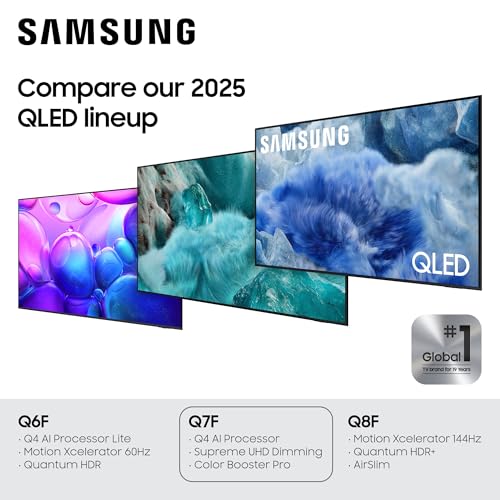
Quantum Dot colors AI-powered real-time picture Over 2,700 free channels Samsung Knox triple-layer security protection
No Dolby Vision HDR format support
The Q7F makes a compelling case for those who prioritize color accuracy and brightness. The Quantum Dot panel produces over a billion shades that maintain their integrity regardless of ambient light, meaning afternoon football games and evening movie marathons both benefit from rich, true-to-life hues. The AI-powered optimization goes beyond simple picture adjustment. It analyzes content in real-time to boost both color and audio based on what you're watching, creating a more immersive experience without requiring manual tweaking. HDR10+ support with dynamic tone mapping reveals hidden details in both shadowy corners and sun-drenched landscapes, delivering deep blacks alongside vibrant brights.
Samsung has thoughtfully included its triple-layer Knox Security to protect personal data and connected IoT devices, addressing a concern many households face as televisions become smart home hubs. The free content ecosystem remains a standout value, with over 2,700 channels including live news, sports, and movies through Samsung TV Plus—no subscription required.
The upscaling engine works diligently to bring lower-resolution content closer to 4K clarity, making the vast screen size practical for everyday viewing. While the Q7F embraces HDR10+ as its premium HDR format, it does not support Dolby Vision; most streaming libraries offer both formats, but those with a significant Dolby Vision collection may want to note this format preference. The Samsung's approach instead focuses on mastering brightness and quantum dot precision to create its distinctive visual signature.

Three HDMI 2.1 ports Built-in Google Cast Voice control via Google Assistant remote MEMC and ALLM for smoother gaming
MEMC may introduce occasional artifacts
Sometimes the smartest features aren't the ones advertised in bold letters. The FPD 50 Inch TV packs a surprising amount of modern technology into its 50-inch frame. Its built-in Google TV OS organizes Netflix, YouTube, and Prime Video into a clean, searchable interface, while Google Cast integration means sharing content from a phone or tablet takes just a tap.
The inclusion of three HDMI 2.1 ports, one supporting eARC, feels forward-thinking at this price point—connecting the latest gaming consoles or a high-end soundbar is refreshingly straightforward. Picture quality holds up its end of the bargain with 4K UHD resolution and HDR10 enhancement, delivering crisp details and improved contrast for everyday viewing. Dolby Audio rounds out the package with clear, room-filling sound that handles dialogue and action scenes competently.
The 60Hz panel handles most content smoothly, and Auto Low Latency Mode engages automatically for more responsive gaming sessions. MEMC technology works to reduce motion blur during fast sports and action sequences, though it occasionally introduces slight processing artifacts in complex, quick-moving scenes. Some viewers may notice these subtle imperfections during high-speed camera pans or chaotic action moments. The option exists to adjust or disable the feature entirely based on personal preference, allowing users to prioritize either silky smooth motion or artifact-free purity depending on the content.

Full Array Local Dimming Native 144Hz panel 144Hz Game Mode Pro and FreeSync Premium QLED produces over a billion colors
The Fire TV interface can feel ad-heavy
Hisense has packed remarkable technology into the QD7's expansive frame. The MiniLED backlight system, combined with Full Array Local Dimming, represents a significant step up in contrast performance. Thousands of tiny LEDs work in concert to produce deeper shadows and brighter highlights while minimizing the halos that can plague edge-lit televisions. When the brightness is at its highest, at 600 nits, HDR material really pops—explosions look real, and specular highlights draw the eye without washing out neighboring details. The QLED quantum dot layer does a great job of handling color, showing over a billion hues with enough brightness to make nature documentaries and animation movies look very good.
Gamers will find plenty to appreciate here. The native 144Hz panel pairs with 144Hz Game Mode Pro and AMD FreeSync Premium to deliver variable refresh rates from 48Hz to 144Hz, virtually eliminating screen tearing and stuttering during fast-paced titles. Motion Rate 480, supported by AI-driven MEMC and noise reduction, keeps sports and action sequences crisp and blur-free.
The Fire TV integration places streaming apps front and center, with Alexa voice control just a button press away for launching content or checking scores. The trade-off for this streamlined access is the Fire TV home screen's tendency to promote sponsored content and recommendations prominently—some users may find the interface busier than preferred, though the convenience of having all major apps aggregated in one place remains a genuine benefit for most households.
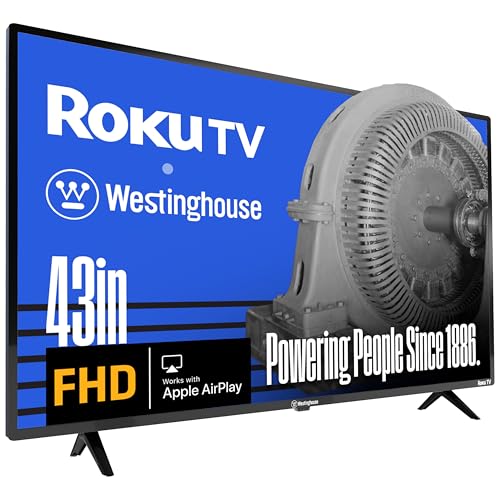
350+ free live TV channels included Simple, customizable Roku home screen Works with Siri, Alexa, and Google Assistant Apple AirPlay 2 and Roku Mobile App casting
Built in sound feels a bit small
Westinghouse keeps things refreshingly uncomplicated with this Roku powered television. The 1080p resolution, while not 4K, provides a clean and detailed image that suits the 43 inch screen size perfectly. Colors appear natural, and the 16:9 aspect ratio handles modern content without awkward letterboxing. The real strength lies in the Roku platform itself, which organizes over 350 free live channels and thousands of streaming apps into a simple, customizable home screen. Navigating between Netflix, Pluto TV, YouTube TV, and sports apps feels intuitive, with no complicated menus to memorize. The remote gets you where you want to go quickly.
Smart home integration adds another layer of convenience. The TV plays nicely with Siri, Alexa, and Google Assistant, allowing hands-free control for power, volume, and content selection. Plus, the Apple AirPlay 2 and the Roku Mobile App make casting photos, music, or videos from a phone effortless. Three HDMI ports provide ample connectivity for a game console, streaming device, and cable box simultaneously. The built-in speakers deliver adequate volume for everyday viewing, though they lack the fullness to fill larger rooms with rich sound. Adding a budget friendly soundbar or even a basic speaker setup transforms the audio experience dramatically, letting the crisp 1080p picture take center stage without compromise.

Over 500 free live TV channels Fast, intuitive Roku interface Automatic software updates Voice control with Siri, Alexa, Google
No stereo or RCA audio outputs
Roku understands that streaming should feel effortless, and this 40 inch model delivers exactly that experience. The 1080p Full HD panel produces a bright, clean image that suits closer viewing distances perfectly. Roku Smart Picture works behind the scenes, automatically optimizing incoming signals and selecting appropriate picture modes so users never need to fiddle with complex settings. The interface itself remains the star, with a customizable home screen that puts favorite apps front and center. Navigation feels snappy thanks to fast Wi-Fi connectivity, and automatic software updates ensure new apps and features appear without any effort.
Content availability impresses at this price point. Over 500 free live TV channels, including Roku Originals, local news, and weather, provide endless options without subscription fatigue. The platform aggregates everything into one logical menu, making discovery genuinely enjoyable rather than overwhelming. Voice control works across multiple ecosystems including Siri, Alexa, and Google Assistant, while Apple AirPlay adds seamless casting from iOS devices.
The only connectivity consideration involves audio output options. The absence of stereo or RCA outputs means connecting older sound systems requires additional adapters. Most modern soundbars connect via HDMI or optical, but users with legacy audio equipment may need to plan accordingly. The built in speakers handle everyday viewing adequately, and for those wanting richer sound, the HDMI port accommodates modern audio upgrades easily.
Which Characteristics To Consider On Selecting best tv for home theater For 2026?
To make a practical purchase, you guys need to be aware of best tv for home theater ultimately. Several key factors must be taken into account and evaluated. Of course, there are some challenges for you during the process of studying products. So we are available here to provide you with comprehensive advice and support.
Thanks to the evaluation supported by high technology, we have come up with some significant features for you to go through. Let’s check it below!
Smart TVs
Connectivity
Display Types
High Dynamic Range (HDR)
HDMI And Connections
TV Screen Sizes
Screen Resolution
Refresh Rate
FAQs
What type of TV is best for a home theater setup?
OLED TVs are often considered the best for home theater due to their perfect black levels and superior contrast, while QLED and Mini-LED TVs offer higher brightness for brighter rooms.
Is 4K resolution necessary for a home theater TV?
Yes. 4K resolution provides sharper detail and is now the standard for streaming, Blu-ray, and gaming content.
Should I use built-in speakers or a sound system?
While some premium TVs have decent audio, a dedicated soundbar or surround sound system significantly improves the home theater experience.
About Michael Brown