The 7 Best Sony Projector Vpl For 2025
 By, Michael Brown
Updated
Summary

Sony VPL-XW5000ES 4K Projector

Sony VPL-HW45ES Projector

Sony VPL-VW325ES Projector
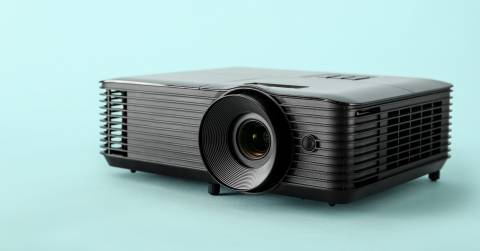
Sony’s VPL series projectors have long been recognized for their exceptional image quality, reliability, and advanced technology, making them a top choice for home theaters, business presentations, and professional cinema setups. Whether you’re looking for vibrant colors, sharp detail, or smooth motion handling, a Sony VPL projector can elevate your viewing experience like few others.
Choosing the best Sony VPL projector isn’t just about picking the newest model. Factors such as brightness, resolution, connectivity, and throw distance play a crucial role in ensuring the projector meets your specific needs. Some models excel in home entertainment, offering cinematic visuals for movies and gaming, while others are designed for professional use, delivering crisp, detailed projections in larger venues.
In this guide, we’ve carefully selected the top Sony VPL projectors based on performance, user feedback, and value for money. Whether you’re upgrading your home theater or equipping a conference room, this list will help you find the perfect Sony projector that fits your space, usage, and budget.
Our Top Picks


Native 4K SXRD resolution X1 Ultimate image processing TRILUMINOS PRO color accuracy Long-life laser light source
Premium pricing
Unboxing the Sony VPL-XW5000ES feels like preparing for a night dedicated to movies, not menus. It has a native 4K SXRD screen that can show a full 3,840 × 2,160 resolution with clear detail and rich texture. This makes wide-open spaces and little shadow details look more real than just bright.
Sony’s X1 Ultimate for projector technology elevates that imagery even further, processing each scene with refined contrast and nuanced tones that extend beyond basic HDR benefits. Bring in TRILUMINOS PRO color processing, and the projector paints over a billion distinct hues, which gives content a more lifelike feel rather than an artificial “pop.”
The laser light source is a highlight here. Rated for up to 2,000 lumens of brightness and an exceptionally long life (around 20,000 hours), it keeps visuals vibrant without the fading or frequent bulb changes that many traditional lamps require. However, true 4K laser projectors naturally command a premium price. But for viewers who want an immersive, theater-level canvas at home, that investment helps deliver brightness, scale, and color performance that traditional televisions can’t match.

Rich Full HD picture quality Sony SXRD contrast performance Natural motion handling Long lamp life design
Lamp brightness is lower than laser models
The first time the VPL-HW45ES throws an image on your screen or wall, its Full HD (1920 × 1080) resolution stands out in an understated but unmistakable way. Landscapes have texture, facial features look real, and standard HD sources look much cleaner than lower-resolution projectors. This is especially essential in dedicated viewing locations where the audience sits closer to the screen.
Sony's SXRD panel technology and enhanced reality enhancement assist keep contrast and motion clarity that many casual setups don't have. In darker settings, deep blacks keep in form, and in lighter scenes, highlights stay clear without washing out other features. It's the kind of balance that makes watching films at night feel more like you're in the movie than just watching a box on the wall.
This projector uses a long-lasting lamp rated for around 6,000 hours, so you aren’t trading performance for constant replacements. Nevertheless, the lamp-based brightness isn’t as high as some premium laser units. In well-controlled lighting environments or dedicated media rooms the picture holds up beautifully, but in brighter rooms you’ll see the difference compared to more intense light sources.

Native 4K SXRD panels Strong HDR contrast handling Smooth motion processing Wide, accurate color range
A bit large and heavy
Sony equips the VPL-VW325ES with its X1 processor for the projector, and that foundation shows in how carefully images are handled. Native 4K resolution across three SXRD imagers delivers sharp detail, while Advanced Reality Creation refines lower-resolution content without adding harsh noise. When switching between bright and dark scenes, Dynamic HDR Enhancer works scene by scene to maintain depth and contrast, helping highlights and shadows stay balanced.
TRILUMINOS Display expands the color palette, which adds richness to films and animated content without oversaturation. Motionflow steps in during fast-moving scenes, keeping action smooth whether you are watching sports, movies, or playing games. Gamers also benefit from input lag reduction, which helps keep on-screen response quick and controlled.
Brightness reaches 1,500 lumens, enough to maintain clarity in a dedicated home theater environment. With HDCP 2.2 support on both HDMI inputs, accessing modern 4K content services is straightforward. Although the projector is a bit large and heavy, that solid build supports the advanced internal components, making it better suited for permanent installations rather than frequent repositioning.

Native 4K SXRD imaging Accurate, rich color reproduction Smooth motion for action scenes Flexible lens shift options
Fan noise under load
This projector aims to recreate a cinematic atmosphere at home, whether you are watching movies, sports, or enjoying high-resolution streaming content. The VPL-VW295ES has three SXRD imagers at its core, each with a native resolution of 4096 x 2160. This setup delivers finely detailed images that look crisp even on large screens. Sony’s Reality Creation technology works quietly in the background, analyzing every pixel to upscale lower-resolution sources while keeping textures clean and controlled.
HDR compatibility further improves depth by expanding contrast, helping bright highlights and darker scenes coexist naturally. Plus, motionflow technology keeps fast-paced scenes smooth, making action movies and sports broadcasts easier to follow without distracting blur.
For installation flexibility, the wide lens shift range allows precise positioning without sacrificing image alignment. IMAX Enhanced compatibility makes compatible entertainment even more immersive, making it feel like you're in a theatre right in your own home. While the fan can become noticeable under heavy load, it is part of the cooling system that allows the high-pressure mercury lamp to maintain stable performance during longer viewing sessions.

Very bright 5,000 lumens Sharp WUXGA resolution Large 300-inch projection Consistent 3LCD color output
Lamp replacement costs over time
The VPL-CH375 is a dependable projector for bigger rooms, and its 5,000 lumens of brightness support that goal well. Images remain clear and readable even when ambient light cannot be fully controlled. The WUXGA native resolution of 1920 x 1200 delivers sharp text and detailed visuals, making it suitable for both video content and data-heavy presentations.
Its 3LCD display system helps maintain consistent color brightness across the screen, which is especially useful when projecting large images up to a 300-inch diagonal. A contrast ratio of 2,500:1 adds depth to visuals, helping content look defined without appearing flat. Installation flexibility is supported by the wide 16:10 aspect ratio and a throw ratio ranging from 1.5:1 to 2.2:1, allowing the projector to adapt to different room layouts.
Lamp life reaches up to 3,000 hours in normal mode, providing dependable use before maintenance is required. Over time, replacing the lamp can add to long-term ownership costs, but this trade-off comes with the benefit of stable brightness and consistent image quality throughout its operating life, especially in demanding professional environments.

High 15,000:1 contrast ratio Smooth Full HD SXRD image Precise color tuning controls Very quiet fan operation
Not optimized for gaming
Sony’s VPL-VW50 centers its performance on image precision rather than raw specifications. The three SXRD 1920 x 1080 panels work together to produce a clean Full HD picture with minimal screen door effect and smooth motion, helped by the fast panel response times. Advanced Iris 2 dynamically adjusts light output based on each scene, pushing contrast up to 15,000:1 and giving bright scenes clarity while keeping dark scenes rich and detailed.
The ARC-F lens is important for keeping the whole image in sharp focus. It uses the whole panel resolution without making the edges fuzzy. Color control is handled by Real Color Processing, which allows fine adjustments to individual colors without disturbing the overall balance. This level of control is especially useful for viewers who like to tune the picture to match their room or content.
Noise is kept impressively low thanks to the ultra-quiet fan, rated at just 22dB, allowing the projector to blend into the background during movie nights. While it is not optimized for gaming, this design choice keeps the focus firmly on cinematic performance, making it better suited for films and long-form viewing rather than fast-paced interactive play.

4,300 lumens Sharp WUXGA image clarity Flexible installation options Wide zoom range of 1.6x
Requires external audio equipment
This projector is a solid choice for presentations and large-scale visual displays. With 4,300 lumens of color light output, projected images remain clear and readable even in rooms that are not fully darkened. The WUXGA 1920 x 1200 resolution in a 16:10 format provides detailed visuals, making it suitable for both video content and information-rich presentations.
Installation flexibility plays a major role in this model’s design. The wide zoom range of 1.6x and a throw ratio from 1.4 to 2.3 allow placement at varying distances from the screen. Lens shift further simplifies setup, with generous vertical and horizontal adjustment options that help avoid ceiling obstacles or off-center mounting challenges.
This projector focuses on display performance rather than built-in media features. As a result, external speakers and controllers are needed for media playback, but this approach allows users to choose audio and control systems that best fit their environment. For conference rooms and large venues, that modular setup can be an advantage rather than a limitation.
What Factors Should You Consider While Choosing best sony projector vpl?
Getting to the best decision for a product purchase may take a bit of time. In a nutshell, we're available to serve you with your product problems at all hours of the day and night!
You can rest assured if you consider the following points before selecting best sony projector vpl:
Connection Methods
Component video, composite video and S-Video all make up the most common connections on large projectors. We're also seeing more projectors that offer direct USB connection to computers via a USB cable. A growing variety of projectors now have USB Type-C ports. The majority of USB-C ports can be used to transfer data or video using the DisplayPort protocol. Most USB-C ports support USB Power Delivery (USB PD), which means that a plugged in projector can supply 100 watts of power to charge a device or to charge it using a USB-C cable (assuming the device is capable of charging over USB-C).
Portability
Resolution
The calculation for projectors that have 4K ultra high definition (3,840 x 2,160 pixels) is slightly different.
Brightness
The ambient lighting level, size and material of your projector screen will all affect the brightness. You should buy a professional seller if you are installing a projector in a permanent location, such as at your home, to ensure that you get the best image brightness and the correct screen material.
Light Source
For longer periods of time, LEDs and lasers retain a greater percentage of their original brightness. While all light sources eventually lose their brightness, lamps lose the most in 500 hours. Then, they slowly decline over time. The brightness of LEDs and lasers will decrease more slowly over the course of their lifetimes.
Contrast Ratio
Contrast ratings can only be used to measure in dark rooms. They don't give any information about ambient lighting. Unusually dark blacks in the projector will result in lower contrast. A brighter projector will perform well in home theaters, but not in living rooms or offices.
Projection Tech
DLP projectors with single-chip DLP chips could be subject to the so-called "rainbow effect." Sometimes, tiny, bright flashes with rainbow-like colors may appear, especially in dark scenes. Some DLP projectors have a minimal effect, while others can produce a distracting result, especially when there are bright areas against shady backgrounds. The rainbow effect is not a problem with LCD projectors, which are safer if someone in your household has sensitive eyes. There are many DLP projectors that produce excellent images.
FAQs
What makes Sony VPL projectors different from other brands?
Sony VPL projectors are known for advanced image processing, 4K clarity, and accurate color reproduction, making them ideal for both home theaters and professional setups.
Can I use a Sony VPL projector in a small room?
Yes, many Sony VPL models are suitable for small to medium rooms. Check the throw distance and brightness to ensure the projector fits your space.
How long do Sony VPL projectors last?
With proper use and maintenance, a Sony VPL projector can last 5–10 years. Regular cleaning of filters and careful handling help maximize lifespan.
In general, product information and news are now available to users. In addition, as previously said, the Internet is constantly updated with new technology. Thus, customers will need to be informed so please subscribe to our newsletter or visit our website frequently to check the latest information.
Do you have any product-related questions or concerns you'd like to share? As a result of your efforts, we will attempt to ensure even greater standards of excellence!
About Michael Brown