The Best Hdr Monitor For 2026
 By, Michael Brown
Updated
Summary
LG 34G600A-B 34-inch Monitor

ASUS TUF Gaming 27” Monitor

SAMSUNG 32" Odyssey G55C Monitor
Do you remember the first time you watched a movie and noticed details hidden in the shadows? Or saw sunlight glint off water in a way that felt almost real? That is the magic of HDR, and finding the Best HDR Monitor means chasing that feeling every single day. Whether you are editing photos, designing graphics, or simply getting lost in your favorite games, HDR transforms how you see the world on screen.
Standard monitors show you a picture. An HDR monitor shows you light. It reveals the subtle gradations in a sunset, the deep blacks of a shadowy corridor, and the brilliant highlights of an explosion without washing out the rest of the scene. For creators, this accuracy is essential. For gamers and movie lovers, it is the difference between watching and truly experiencing.
The challenge lies in separating true HDR from marketing claims. Real HDR requires a display capable of significant brightness, smooth contrast transitions, and wide color coverage. Among the models delivering this authentic experience at an accessible price, the LG 34G600A-B 34-inch Monitor punches well above its class. It combines a crisp 2560x1440 resolution with HDR400 certification, ensuring brighter highlights and improved contrast that brings games and content to life.
Our research focuses on what HDR actually looks like in your room, not just on paper. Let us help you find the screen that finally shows you what you have been missing.
Our Top Picks


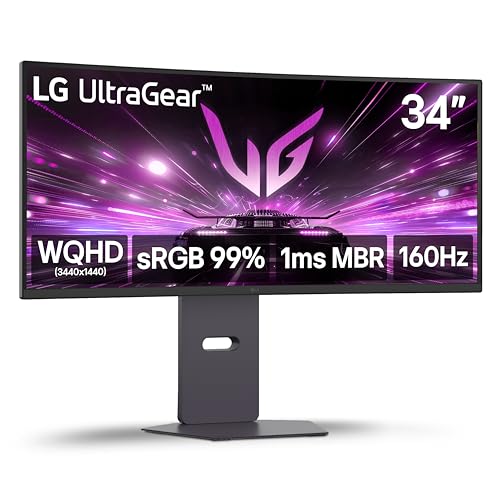
1800R curved WQHD display Buttery smooth 160Hz refresh rate 1ms motion blur reduction for clarity AMD FreeSync Premium eliminates tearing
Ultrawide design needs generous desk space
There comes a moment in every gamer's journey when a flat screen just doesn't feel like enough anymore. The LG 34G600A-B 34-inch Monitor answers that call with a sweeping 1800R curve that wraps around your peripheral vision like a gentle embrace. Specs show a 160Hz refresh rate paired with 1ms Motion Blur Reduction, which together aim to keep fast-paced action sharp and free of distracting ghosting.
AMD FreeSync Premium handles the synchronization duties, promising tear-free gameplay even during HDR scenes by reducing stuttering and input lag. On the color front, HDR10 support combined with up to 99% sRGB coverage suggests visuals that stay rich and impactful, revealing more detail whether you're gaming, streaming, or creating content. LG's Dynamic Action Sync also enters the equation, engineered to minimize input lag for faster reactions during competitive play.
The one minor consideration involves physical real estate: this ultrawide monitor has a substantial footprint. It's a glorious piece of hardware on paper, but you'll want to measure your desk beforehand and maybe rethink that bookshelf speaker placement. Think of it as an invitation to reorganize your setup around a truly expansive viewing experience.

4K resolution ELMB Sync eliminates ghosting and tearing Supports both G-SYNC and FreeSync Premium 95% DCI-P3 color gamut coverage
Contrast ratio leans toward the modest side
The first thing that grabs you is the sheer clarity of the 4K panel paired with that ultra-fast 160Hz refresh rate. Moving through fast-paced shooters feels incredibly fluid, and the ELMB Sync technology works quietly in the background to eliminate ghosting, keeping everything sharp even during chaotic moments. We appreciated that both NVIDIA G-SYNC and AMD FreeSync Premium are supported, meaning no matter what graphics card is in your rig, tearing simply isn't an issue.
The color performance also deserves a mention: covering 95% of the DCI-P3 professional color gamut, this monitor delivers rich, vibrant visuals that make games pop and photo editing viable. ASUS even includes thoughtful touches like an L-shaped screwdriver in the box, which makes wall-mounting setup genuinely easier. One observation we made while searching darker scenes in games and movies is that the contrast ratio feels on the modest side. But it's not a dealbreaker by any means, the blacks still appear deep enough for engrossing gameplay.

Large immersive 32-inch curved display Sharp QHD resolution Smooth 165Hz refresh rate gaming HDR10 enhances contrast and color
The VA panel may show ghosting in fast-moving scenes
Sitting in front of the SAMSUNG 32" Odyssey G55C quickly gives the sense that this monitor was made for immersion. The 32-inch QHD screen offers noticeably sharper visuals compared to Full HD, giving games and videos more detail and depth. With roughly 1.7 times the pixel density of standard HD displays, environments appear clearer and text looks crisp even on the larger panel.
The 1000R curved display plays a big role in the experience. Instead of feeling like you are simply looking at a screen, the curve draws your peripheral vision into the action. It becomes especially engaging in fast-paced games or cinematic scenes where the environment fills more of your view.
Visual quality benefits from HDR10 support, delivering deeper blacks and brighter highlights for more dynamic scenes. At the same time, Eye Saver Mode and flicker reduction help make extended gaming sessions easier on the eyes. Because the monitor uses a VA panel, some ghosting can appear in extremely fast-moving scenes, though for most gaming and entertainment situations the visuals still remain smooth and enjoyable.
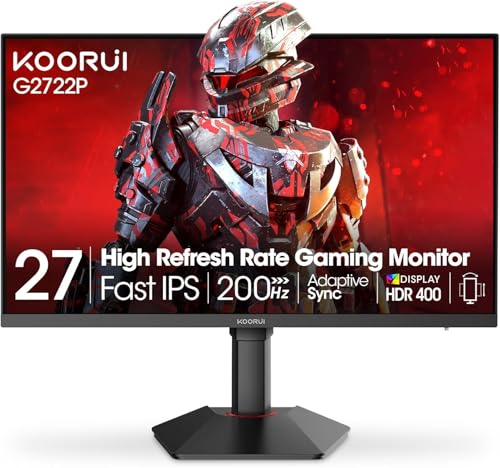
Sharp 27-inch QHD resolution display Smooth 200Hz refresh rate performance Wide viewing angles with Fast IPS Adjustable stand
No built-in speakers included
A good monitor often becomes the centerpiece of a desk setup, and the KOORUI 27 Inch Monitor brings together several features that make daily use more enjoyable. The 27-inch screen runs at a QHD resolution of 2560 × 1440, which means text looks sharper and images appear more detailed compared to standard Full HD displays. When watching high-definition videos or playing modern games, the extra clarity makes scenes feel more immersive.
Motion handling is another strong point. With a 200Hz refresh rate and a 1ms response time, fast-moving scenes remain smooth and responsive. This combination works particularly well for competitive gaming where quick reactions matter. With a 178° viewing range, the image stays vibrant even when viewed from the side. HDR400 support further improves contrast and brightness, helping both darker and brighter areas appear more defined.
Practical design details round out the experience. The adjustable stand allows changes in height, tilt, and rotation, making it easier to find a comfortable viewing position during long sessions. Although this model does not include built-in speakers, it still integrates easily with external audio solutions and keeps the focus on delivering strong visual performance.

Sharp 27-inch QHD resolution display Smooth gameplay Extremely fast 0.5ms response time DCI-P3 support
The stand does not support height adjustment
The Acer Nitro 27 Inch Monitor brings together speed, clarity, and color accuracy in a display that works well for both gaming and creative tasks. Its 2560 × 1440 QHD resolution spreads comfortably across the 27-inch panel, giving games, movies, and creative work plenty of detail. Acer’s zero-frame design also helps the display feel more open, allowing the screen to take center stage without thick borders getting in the way.
Smooth motion is another big part of the experience. With a refresh rate that reaches up to 180Hz, movement on screen stays fluid, which can make a noticeable difference in fast-paced games. Pair that with AMD FreeSync technology, and the monitor works to keep the graphics card and display in sync, reducing tearing and stuttering during gameplay.
Responsiveness is also impressive thanks to a response time that can reach as low as 0.5ms GTG. Quick transitions appear clean, so fast action scenes remain sharp rather than smeared. On the visual side, the IPS panel supports 95% DCI-P3 color coverage, producing accurate and vibrant colors that are useful for designers, photographers, and video editors. The stand keeps the setup stable and simple. While it does not include height adjustment, the monitor still delivers strong visual performance for both gaming and creative work.
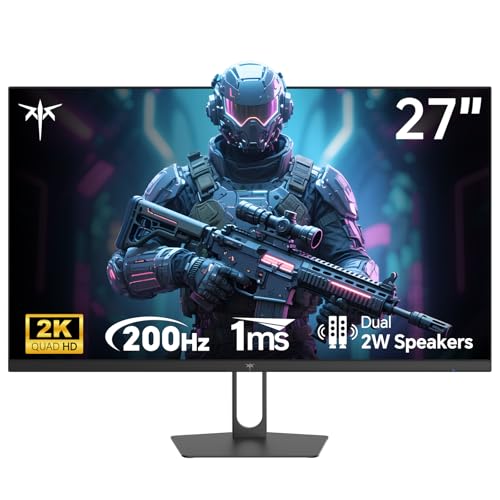
210Hz refresh rate performance Sharp 27-inch 1440p resolution display Wide color gamut with HDR400 Adaptive-Sync reduces tearing and stutter
The menu interface and calibration options are relatively simple
The KTC 27 Inch Monitor is designed for people who want a fast and vibrant display that can keep up with both work and play. With a refresh rate that reaches up to 210Hz, motion appears far more fluid than the typical 60Hz screen many people are used to. Fast-paced games benefit the most, as rapid camera movements and quick reactions remain clear instead of blurry or choppy.
The 27-inch panel runs at a 2560 × 1440 resolution, which provides a good level of detail without making the interface feel crowded. Whether you are editing videos, watching movies, or simply juggling multiple windows for work, the extra clarity helps keep everything sharp and readable. Color performance is another pleasant surprise. The Fast IPS panel supports a wide 131% sRGB color gamut along with HDR400 and up to 450 nits of brightness. Together with support for over a billion colors, the screen produces vibrant visuals that make games, photos, and videos look lively.
Adaptive-Sync support, including AMD FreeSync and G-Sync compatibility, helps keep gameplay smooth by reducing tearing and stuttering. A 1ms response time further improves responsiveness during competitive matches. However, the on-screen menu and calibration options are fairly simple compared to more advanced monitors. Still, for most users the default settings still provide a clear and colorful viewing experience.

AMD FreeSync Smooth 160Hz refresh rate Adjustable black levels 4000:1 contrast ratio
Color accuracy is not for professional creative work
The 1500R curvature immediately catches attention, it's pronounced enough to pull you into games and movies without feeling exaggerated or distorting everyday productivity work. Specs show a 160Hz refresh rate paired with 1ms MPRT response time, which together aim to keep fast-paced action fluid and sharp. AMD FreeSync joins the party to handle screen tearing, while HDR support adds extra visual pop when enabled through the HDMI port.
Gamers will appreciate the built-in Game Assistant features: adjustable black levels with a shadow booster for spotting enemies in dark corners, plus an on-screen crosshair, timer, and counter for competitive titles. Preset modes for FPS, RTS, racing, office work, movies, and sRGB let you quickly tailor the experience to whatever you're doing.
Color performance lands in a solid place for gaming and general use, with a 4000:1 contrast ratio delivering deeper blacks than many competitors and 110% sRGB coverage ensuring vibrant, punchy visuals. The one consideration involves color-critical work: creative professionals editing photos or video may find the accuracy falls short of strict industry standards. But for immersive gaming and entertainment, the curved panel and smooth performance make a compelling case.
What to Look For in a best hdr monitor?
Panel Type
Resolution
Screen Size
Brightness
Refresh Rate
Aspect Ratio
Connections
Response Time
FAQs
What is an HDR monitor?
An HDR monitor supports High Dynamic Range, allowing it to display brighter highlights, deeper blacks, and a wider range of colors compared to standard displays.
Is HDR important for gaming and movies?
Yes, HDR enhances visual realism by improving contrast and color depth, making games and movies appear more vibrant and detailed.
Do all HDR monitors offer the same quality?
No, HDR quality varies significantly. Monitors with higher brightness levels, local dimming, and wide color gamut support typically deliver a better HDR experience.
About Michael Brown