The Best Optoma Dlp Projector Models For 2026
 By, Michael Brown
Updated
Summary

Optoma HD146X Projector

Optoma HD28HDR Projector

Optoma HD39HDRx Projector
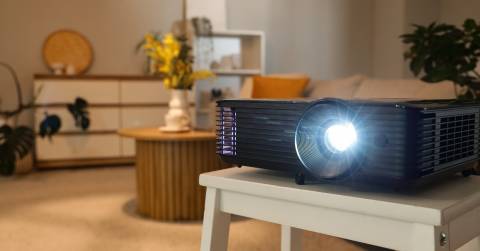
Optoma has built its reputation on the sharp, vibrant, and reliable performance of its DLP (Digital Light Processing) technology. Known for delivering exceptional contrast, smooth motion handling, and long-lasting brightness, these projectors are a top choice for home cinema enthusiasts, gamers, and presenters alike. Choosing the best model means matching Optoma’s optical precision with the specific demands of your viewing environment, whether that’s a light-controlled theater or a versatile living space.
Your decision will center on finding the right balance of resolution, brightness, and specialized features. For gamers, a model with a high refresh rate and low input lag is non-negotiable, while home cinema purists will prioritize deep blacks and accurate color reproduction. A great example in their gaming and entertainment lineup is the Optoma HD146X Projector, renowned for its high brightness and dedicated Enhanced Gaming Mode that delivers a competitive edge.
Our evaluation goes beyond specifications to assess how these projectors perform in real-world scenarios. We’ve compared the key models feature-by-feature to cut through the complexity, making it clear which projector is the ideal investment for your room and your budget.
Our Top Picks


Bright 3,600-lumen, high-contrast image Fast 16ms response time Game mode enhances visibility in shadows Extremely long 15,000-hour lamp life
Requires careful placement without lens shift
The Optoma HD146X is engineered for impact right out of the box. Its 3,600 lumens of brightness and 25,000:1 contrast ratio combine to produce a vivid, dynamic picture that fills a wall with color and detail, making films feel expansive and immersive. For gamers, it’s particularly compelling; the Enhanced Gaming Mode achieves a swift 16ms response time to keep up with the action, while a special Game Display Mode brightens dark scenes to reveal hidden details. Practical touches like HDMI-Link for single-remote control and an impressive 15,000-hour lamp life underscore its design for hassle-free, long-term enjoyment.
Achieving that perfect, rectangular image on your wall or screen requires careful placement of the projector itself. This model does not feature a lens shift adjustment, meaning you’ll need to position it squarely in front of your projection surface and use its adjustable feet for fine-tuning. Taking a few moments to align it during setup is a straightforward step that unlocks its full potential for a stunning, room-filling picture.

High 3,600-lumen brightness Excellent 16ms response time Dynamic Black for enhanced contrast Extremely long 15,000-hour lamp life
Fan noise is audible during quiet scenes
Optoma positions this model as a multi-talented performer. The 3,600-lumen brightness ensures a vibrant, colorful image that holds up even with some ambient light in the room. For critical viewing, its support for HDR10 technology (with a 4K input signal) and Dynamic Black work together to deepen contrast, making bright scenes pop and preserving detail in shadows.
Gamers are particularly well-served by a dedicated Enhanced Gaming Mode, which delivers a super-responsive 16ms input lag and a 120Hz refresh rate for smooth motion, plus a feature that brightens dark game areas. With a lamp life rated up to 15,000 hours, it’s built for years of use, and connectivity is a breeze with HDMI ports ready for streaming dongles or consoles.
The cooling system, essential for maintaining performance, does its job effectively. During very quiet dialogue or silent scenes in a film, you may become aware of the fan's gentle hum in an otherwise silent room. This operational sound is common in projectors at this brightness level and becomes a non-issue once the movie’s soundtrack or game audio begins, letting the impressive picture quality take full command of your attention.

Bright 4,000-lumen output Ultra-fast 8.4ms gaming response time Flexible 1.3x zoom and keystone correction Supports full 3D and 4K HDR input
Physical size requires a sturdy mounting solution
The HD39HDRx leads with impressive specifications. Its 4,000 lumens of brightness is a standout, confidently cutting through ambient light for flexible viewing at any hour. The 4K HDR input support and 50,000:1 contrast ratio work in tandem to deliver a picture with vibrant color depth and sharp detail. For gamers, the 8.4ms response time is exceptionally quick, ensuring split-second actions feel instantaneous.
Installation is user-friendly, thanks to a 1.3x zoom and vertical keystone correction, offering some flexibility in where you place the unit. With dual HDMI ports and a 15,000-hour lamp life, it’s prepared for years of connected, high-impact use.
This robust performance comes from internal components that require ample cooling and housing. The projector’s physical footprint is somewhat substantial, which is a point to consider for permanent ceiling installations. Ensuring your mounting setup is sturdy enough to support its size and weight is a recommended first step, after which the projector rewards you with a brilliantly bright and responsive big-screen experience.

Laser light source with 30,000-hour life Short-throw for large images in small rooms High 300,000:1 contrast ratio Energy-efficient and dust-resistant (IPX6)
The setup requires careful alignment for optimal image
Taming a small room for a larger-than-life viewing experience is a unique challenge. The Optoma GT2000HDR Projector is engineered specifically for this task, combining a short-throw laser light source with a compact form. Its DuraCore laser light source is rated for up to 30,000 hours of use and features IPX6 dust resistance for reliable, maintenance-free operation.
The short-throw feature is a space-saving miracle that lets you see a massive picture in a small location where a regular projector wouldn't fit. The performance is strong, with a clear 1080p resolution, compatibility for 4K HDR input for better color, and a high contrast ratio of 300,000:1. Plus, an improved game mode makes sure that the game responds quickly, and connecting by HDMI and USB is easy.
To achieve a perfectly square and aligned image on your wall or screen, the initial setup demands attention. The short-throw design is less forgiving of off-angle placement than a standard throw lens. You'll want to take careful measurements and make fine adjustments during installation to utilize its space-saving strength fully. Once optimally positioned, it delivers a brilliantly bright and immersive picture with remarkable convenience for the long term.

Very bright 4,000-lumen output Easy setup with wide keystone correction Lightweight and highly portable Extensive connectivity options
Color accuracy is tuned for presentations over cinema
In environments where clarity and connectivity are key, the Optoma W400LVe projector serves as a reliable and portable visual hub. Its 4,000 lumens of brightness ensure presentations remain vivid and readable even with the lights on, while the WXGA resolution provides ample detail for slides, graphics, and video. Setup is notably user-friendly; the generous +/- 40-degree vertical keystone correction and 1.1x zoom allow for flexible placement without complex mounting.
With ports for HDMI, VGA, USB power, and more, it seamlessly connects to laptops, streaming dongles, and other media sources. The integrated 10-watt speaker adds convenience for audio, and a lamp life of up to 15,000 hours translates to years of dependable service.
The color performance is tuned for reliability and impact in a business or lecture context, delivering vibrant hues that make charts and graphics pop. For dedicated movie viewing in a home theater context, the color reproduction is average, prioritizing brightness and contrast over nuanced cinematic accuracy. This makes it a supremely capable tool for its intended purpose of presentations and shared media, where its brightness, portability, and ease of use are the defining strengths.

Bright 4K laser with 500,000:1 contrast Ultra-low latency Maintenance-free 30,000-hour laser life Dust-resistant (IPX6)
Requires an external device for streaming apps
For a cinematic escape that begins the moment you press 'power,' the Optoma UHZ66 Laser Projector is engineered to impress. It has a laser light source delivering 4,000 lumens and a remarkable 500,000:1 contrast ratio, ensuring a vivid picture with deep blacks even before sunset. The true 4K resolution showcases every detail with stunning clarity, while support for 4K HDR input enriches the color palette.
Gamers are exceptionally well-catered to, with dedicated low-latency modes for both 4K and 1080p signals. Practicality is a strong suit, thanks to the laser's 30,000-hour lifespan, IPX6 dust resistance, and significant energy efficiency. Connectivity is robust with dual HDMI 2.0 ports and ARC/eARC support for high-quality audio systems.
This projector is designed as a premium video and gaming display, focusing its technology entirely on picture quality and performance. It does not include a built-in smart TV platform, meaning you'll need to connect an external media streamer, gaming console, or Blu-ray player to access your favorite apps and content. This approach keeps the interface dedicated and performance-focused, allowing you to choose your preferred streaming device while the UHZ66 delivers a stunning, theater-quality canvas.

Ultra-long-life DuraCore laser engine High 300,000:1 contrast ratio Dust-resistant IPX6 construction Low input lag enhanced gaming mode
Laser lifespan is a bit shorter than that of some competing models
Unboxing the HZ40HDR feels like you're setting up for the long haul. The heart of the experience is its DuraCore laser engine, which promises up to 30,000 hours of use. That number isn't just a spec; it's a commitment. It means you can settle in for a film almost any evening for years, with no worry about a lamp dimming or failing. The laser also has an IPX6 rating, which means that dust, which is a silent killer of many projectors, can't get in. The picture is deep and powerful, filling a 120-inch screen with 1080p resolution, a 300,000:1 contrast ratio, and 4K HDR input compatibility.
We did note that the rated lamp life, while robust, is a bit shorter than some other laser models on the market. However, translating 30,000 hours into real-world use still offers over a decade of viewing at eight hours a day, which frames this "shorter" lifespan as a testament to just how far projection technology has come. It shifts the perspective from a potential limitation to a reminder of the sheer, reliable longevity you're getting compared to the traditional bulb-based projectors of the past.
What to Look For in a best optoma dlp projector models?
Contrast Ratio
Contrast ratings can only be used to measure in dark rooms. They don't give any information about ambient lighting. Unusually dark blacks in the projector will result in lower contrast. A brighter projector will perform well in home theaters, but not in living rooms or offices.
Connection Methods
Component video, composite video and S-Video all make up the most common connections on large projectors. We're also seeing more projectors that offer direct USB connection to computers via a USB cable. A growing variety of projectors now have USB Type-C ports. The majority of USB-C ports can be used to transfer data or video using the DisplayPort protocol. Most USB-C ports support USB Power Delivery (USB PD), which means that a plugged in projector can supply 100 watts of power to charge a device or to charge it using a USB-C cable (assuming the device is capable of charging over USB-C).
Portability
Light Source
For longer periods of time, LEDs and lasers retain a greater percentage of their original brightness. While all light sources eventually lose their brightness, lamps lose the most in 500 hours. Then, they slowly decline over time. The brightness of LEDs and lasers will decrease more slowly over the course of their lifetimes.
Projection Tech
DLP projectors with single-chip DLP chips could be subject to the so-called "rainbow effect." Sometimes, tiny, bright flashes with rainbow-like colors may appear, especially in dark scenes. Some DLP projectors have a minimal effect, while others can produce a distracting result, especially when there are bright areas against shady backgrounds. The rainbow effect is not a problem with LCD projectors, which are safer if someone in your household has sensitive eyes. There are many DLP projectors that produce excellent images.
Resolution
The calculation for projectors that have 4K ultra high definition (3,840 x 2,160 pixels) is slightly different.
Brightness
The ambient lighting level, size and material of your projector screen will all affect the brightness. You should buy a professional seller if you are installing a projector in a permanent location, such as at your home, to ensure that you get the best image brightness and the correct screen material.
FAQs
What makes Optoma DLP projectors different from other projector types?
Optoma DLP projectors use DLP technology for sharper images, better motion handling, and higher contrast compared to many LCD projectors.
Are Optoma DLP projectors good for home theater use?
Yes, many Optoma DLP models are designed for home theaters, offering high resolution, strong brightness levels, and accurate color performance.
Which Optoma DLP projector is best for gaming?
Optoma offers DLP projectors with low input lag and fast refresh rates, making certain models ideal for console and PC gaming.
Conclusion
So, what's the easiest approach to get the best optoma dlp projector models you need quickly? You may use what we know about cognitive neuroscience concepts in your marketing approach.
When choosing the ideal product, you must have a clear idea of what you want in terms of price, quality, and function. If you don’t like any model in this list, then the Optoma HZ40HDR Projector will be your new buddy.
About Michael Brown